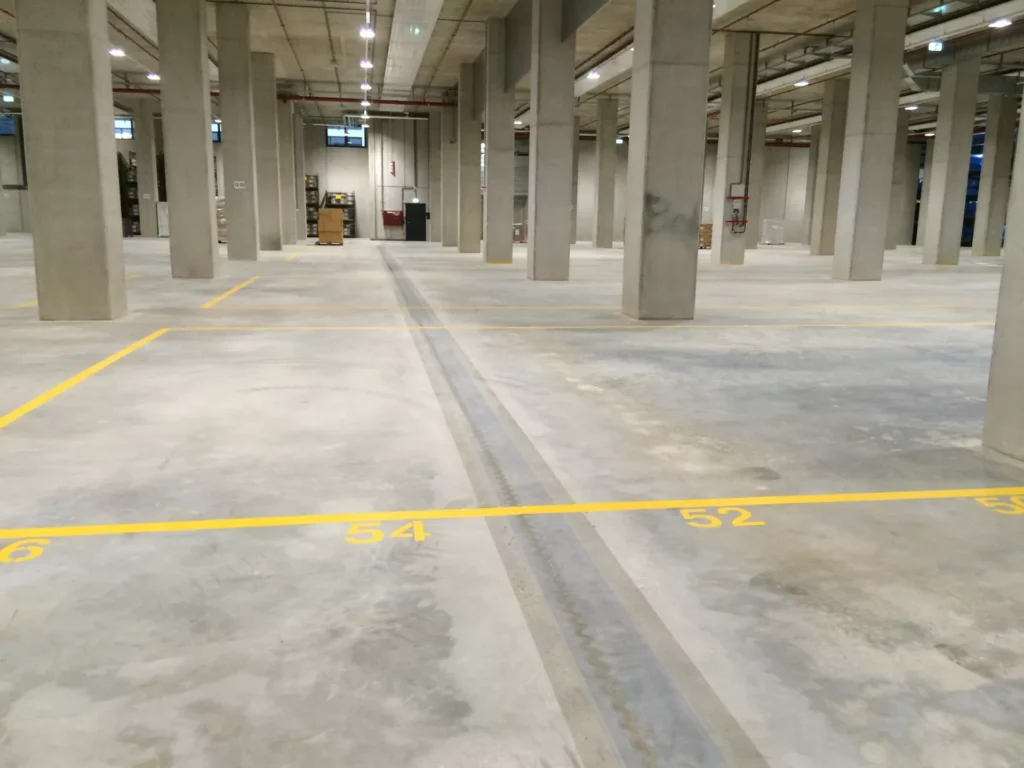
If you walk into most industrial buildings, you’ll see concrete floors.
Solid. Thick. Heavy. Permanent.
Because of that, many facility owners assume something simple: concrete must be safe from static problems. After all, it’s connected to the ground, right?
That assumption sounds logical — but in practice, it’s not that simple.
The difference between bare concrete and a true anti-static flooring system isn’t about appearance. It’s about control. And in sensitive environments, control is everything.
Why This Question Even Comes Up
Static electricity isn’t something people usually worry about unless they work in electronics or hazardous processing.
It doesn’t look dangerous.
It doesn’t leave visible marks.
It doesn’t usually stop production immediately.
So when someone suggests installing anti-static flooring, the first reaction is often:
“Do we really need that? Isn’t concrete enough?”
It’s a fair question. But the answer depends on how consistent you want your protection to be.
What Concrete Actually Does
Concrete can conduct electricity under certain conditions. That part is true.
But here’s what many people don’t realise — concrete’s electrical behaviour changes depending on:
- Humidity levels
- Temperature
- Surface contamination
- Age of the slab
- Whether it’s sealed or coated
On a humid day, concrete may allow static charge to move more easily.
On a dry day, especially inside air-conditioned or climate-controlled facilities, its resistance can increase significantly.
That means static can build up instead of safely dissipating.
So concrete isn’t useless — it’s inconsistent.
And in technical environments, inconsistency creates risk.
The Moisture Factor Most People Overlook
Concrete is porous. It absorbs moisture from the environment.
That moisture content affects how well it conducts electricity.
During the monsoon season or in coastal areas, conductivity might appear acceptable.
But during dry months, resistance rises.
The flooring hasn’t changed visually — but its electrical performance has.
You can’t build a static control strategy around seasonal weather patterns.
What Happens Over Time
Concrete floors don’t remain in their original condition forever.
- They get sealed.
- They get densified.
- They collect dust.
- They get polished.
Each of these changes affects electrical resistance.
For example, applying a surface sealer may improve durability — but it can also reduce the slab’s natural conductivity.
Dust accumulation can further increase resistance.
So even if concrete performs “okay” at the beginning, it may not remain reliable long-term.
What Anti-Static Flooring Does Differently
Anti-static (ESD) flooring is engineered specifically to manage electrical charge.
It’s not relying on moisture content. It’s not depending on environmental conditions.
The system is designed with conductive or static-dissipative materials built directly into the flooring layer.
More importantly, it includes a grounding pathway.
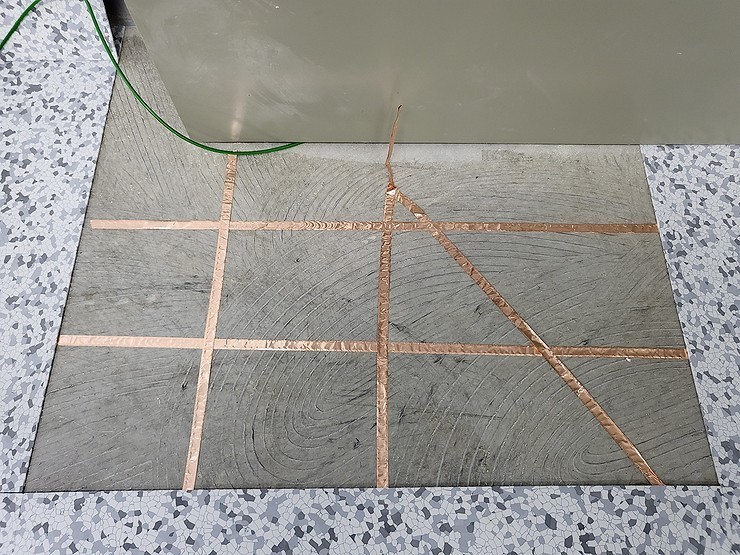
Copper grounding strips are installed beneath the surface and connected to the building’s earth system. This ensures the charge has a controlled route to follow.
- It doesn’t guess.
- It doesn’t depend on humidity.
- It performs within a measurable range.
And that measurable consistency is what makes the difference.
The Real Risk Isn’t the Spark You Feel
Most people associate static with a noticeable shock.
But in industrial environments, the real concern is discharge that happens below the level humans can feel.
Electronics can be damaged at voltages far lower than what a person would notice.
So by the time someone feels a shock, the sensitive components may have already been exposed to much smaller, repeated discharges.
That’s why relying on “we haven’t noticed any sparks” isn’t a reliable indicator of safety.

Where Concrete May Be Enough
To be clear — not every facility needs anti-static flooring.
If you’re running a general warehouse storing non-sensitive goods, static risk may be minimal.
If your operation doesn’t involve electronics, flammable vapours, or strict compliance standards, bare concrete might be acceptable.
The key is understanding your environment.
Where Concrete Is Not Enough
Concrete becomes risky in places like:
- Electronics manufacturing units
- PCB assembly lines
- Data centers
- Pharmaceutical labs
- Battery manufacturing plants
- Chemical processing areas
In these environments, static isn’t just uncomfortable — it can affect product quality, equipment reliability, and safety.
Consistency matters more than cost savings.

Cost vs. Consequence
At first glance, anti-static flooring costs more than leaving concrete exposed.
But the better question is: compared to what?
Compared to replacing damaged components?
Compared to warranty claims?
Compared to unexplained product failures?
Static-related losses are often hidden inside defect rates and service returns.
And because they’re not dramatic events, they can continue quietly for years.
Investing in proper static control is usually less expensive than chasing unpredictable failures.
Testing Before Deciding
Instead of guessing, facilities should test.
Surface resistance testing can determine whether your current flooring falls within acceptable ranges for your industry.
If the readings fluctuate significantly, that’s a sign of inconsistency.
Data removes assumptions.
And decisions based on measurement are always better than decisions based on appearance.
Final Thoughts
Bare concrete isn’t automatically unsafe.
But it isn’t automatically safe either.
It’s unpredictable — and unpredictability is the real issue in controlled industrial environments.
Anti-static flooring isn’t about adding something fancy to your building.
It’s about creating consistency.
If your operations depend on sensitive equipment or strict quality standards, relying on concrete alone may be taking a chance you don’t need to take.
Sometimes the difference between “good enough” and “reliable” is what protects your operation long-term.