
- Home
- Services
- EPOXY FLOORING
- POLYURETHANE FLOORING
- DI-ELECRIC FLOORING
- ANTI-STATIC EPOXY FLOORING
- ESD FLOORING
- ACCESS FLOORS
- CAR PARK DECK FLOORING
- CLEAN ROOM FLOORING
- HEAVY DUTY EPOXY FLOORING
- HYGIENE FLOORING
- SELF LEVELLING EPOXY FLOORING
- COLD STORAGE FLOORING
- ACID RESISTANCE FLOORING
- CAR PARK COATING
- EXPANSION JOINTS
- Projects
- Blog
- About Us
- Contact
What are the benefits of using ESD flooring in industrial settings?
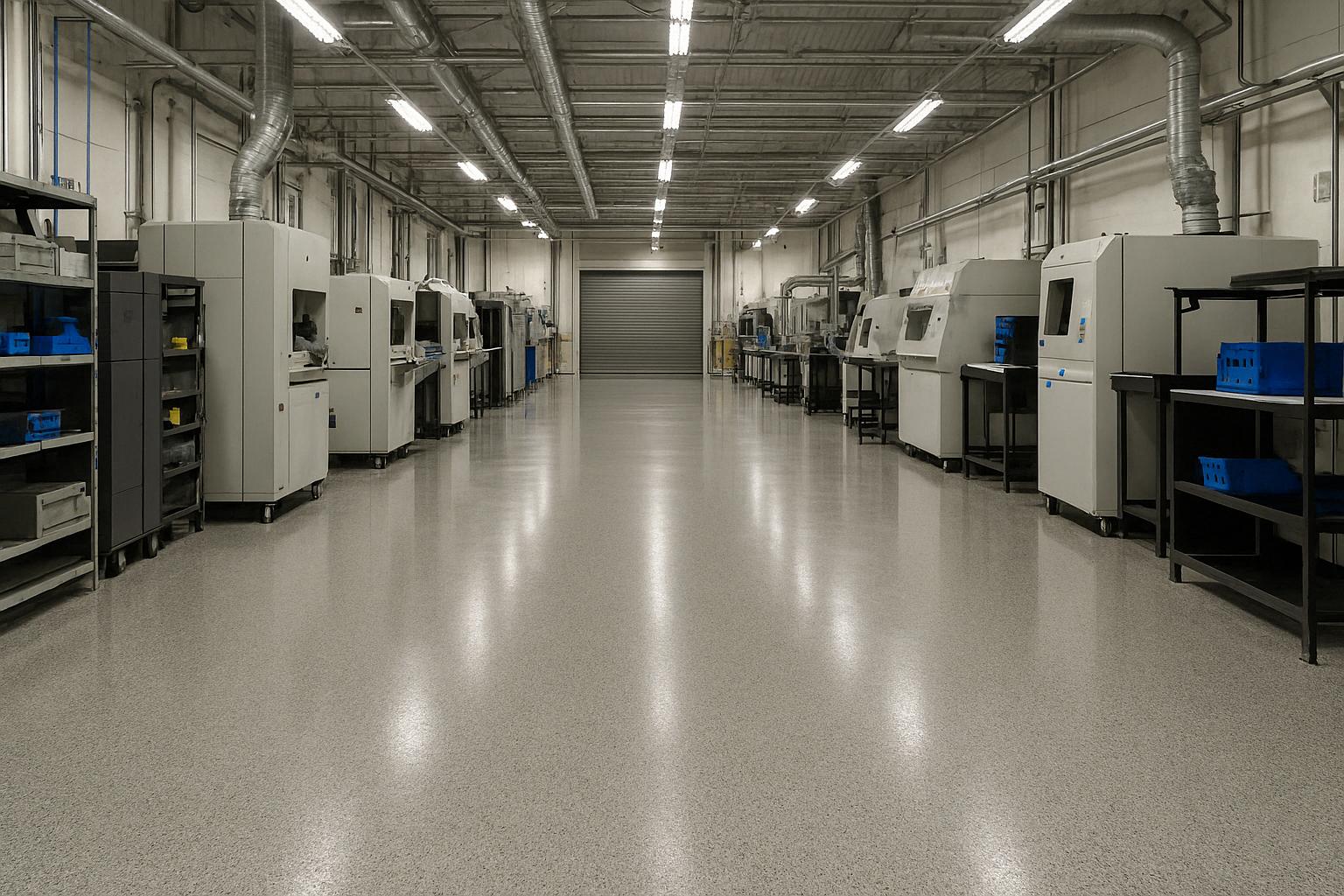
ESD (electrostatic discharge) flooring is a revolutionary product in cases where there is sensitive electronics, flammable chemicals, or critical equipment involved.
1. Stops Electrostatic Discharge Damage
The primary reason for using ESD flooring is to dissipate static electricity safely to ground.
It insulates sensitive electronic components from ESD-related failures during assembly, repair, or inspection.
A requirement in the electronics industry, aerospace, medical device production, etc.
2. Improves Product & Equipment Protection
ESD events may produce latent damage to microchips, semiconductors, or circuit boards that result in subsequent failure.
ESD flooring aids in greater product reliability and lower expensive recalls or returns.
3. Shields Workers
If flammable dusts or gases are used, a static spark of low intensity might initiate fire or explosion.
ESD floors mitigate the danger by dissipating charges from staff and equipment.
4. Grounding System Compatible
ESD flooring is usually part of a complete ESD control system (wrist straps, heel grounders, conductive shoes).
They all keep everything safely grounded—even carts on wheels and workstations.
5. Reduces Downtime and Maintenance Costs
ESD problems can cause downtime, data loss, or equipment damage.
ESD flooring prevents these risks, resulting in less downtime and lower maintenance costs.
6. Easy to Maintain
Most welcome floors (such as static-dissipative vinyl or epoxy coating) are chemical-resistant, tough, and easy to maintain.
Maintenance keeps them conducting with no special preparation.
7. Industry Standard Compliance
ESD flooring assists companies in complying with ANSI/ESD S20.20, IEC 61340, and other industry static control standards.
It can be a must when companies do government or aerospace business.
Types of ESD floors are:
Vinyl (sheet or tile)
Rubber
Epoxy and polyurethane coatings
ESD carpet (in control rooms or server rooms)
Interlocking conductive tiles
Have Any Question?
- +91 9962699888
- Sales@Chemcoats.com

- 19/10, Rangarajapuram 3rd Street, Netaji Nagar, West Jafferkhanpet, Chennai, Tamil Nadu 600083
- Sales@Chemcoats.com
- +91 9962699888