One of the most common questions facility managers ask when their floors start looking worn out is simple:
“Do we really have to break everything and start from scratch?”
It’s a fair question. Demolition is noisy. It creates dust. It interrupts operations. And in active industrial facilities, downtime is often more expensive than materials.
The good news is this — in many cases, yes, new resin flooring can be installed over an existing floor.
But here’s the honest part.
It depends entirely on what’s underneath.
The Real Issue Isn’t the Surface — It’s the Foundation
When a floor starts cracking, peeling, or looking uneven, most people focus on what they can see.
But flooring systems don’t fail just because of surface wear. They usually fail because of what’s happening below.
Before deciding whether to overlay or remove, the first step is understanding the condition of the substrate.
If the concrete slab underneath is structurally sound, stable, and dry within acceptable limits, overlaying can absolutely work.
If the slab is weak, constantly moving, or holding excessive moisture, covering it up won’t solve anything.
It will only delay the problem.
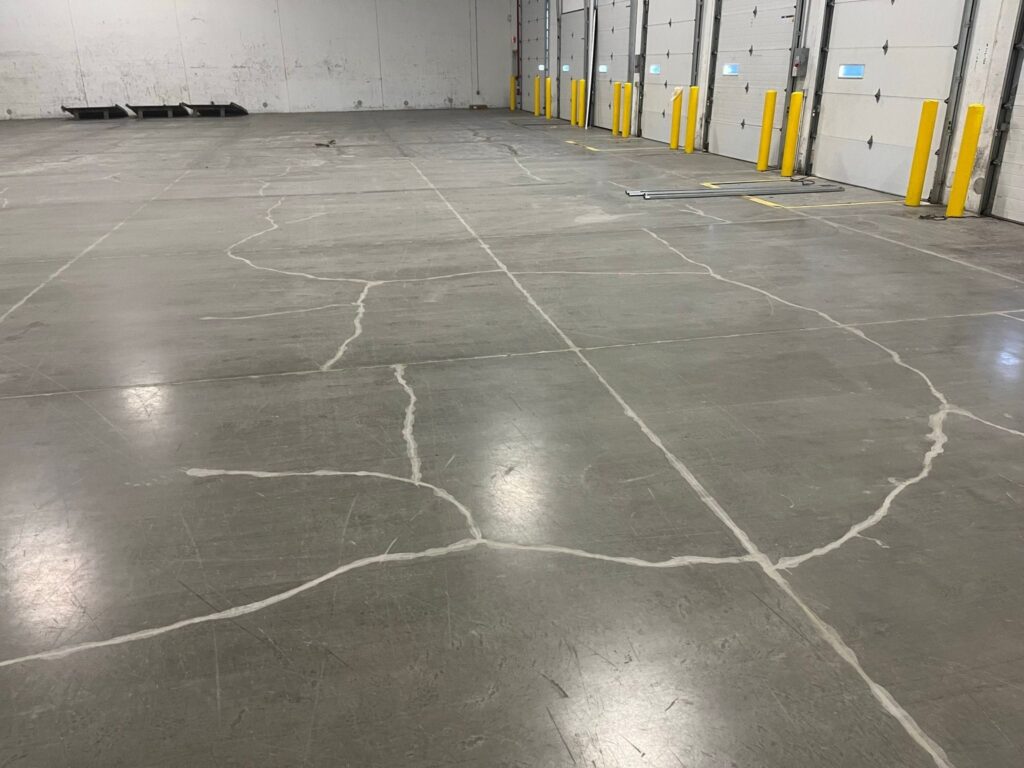
When Overlaying Makes Practical Sense
There are situations where installing new resin over an old surface is not only possible — it’s efficient.
For example:
- The existing concrete is strong but stained or cosmetically damaged.
- An old epoxy coating is still well bonded but worn out.
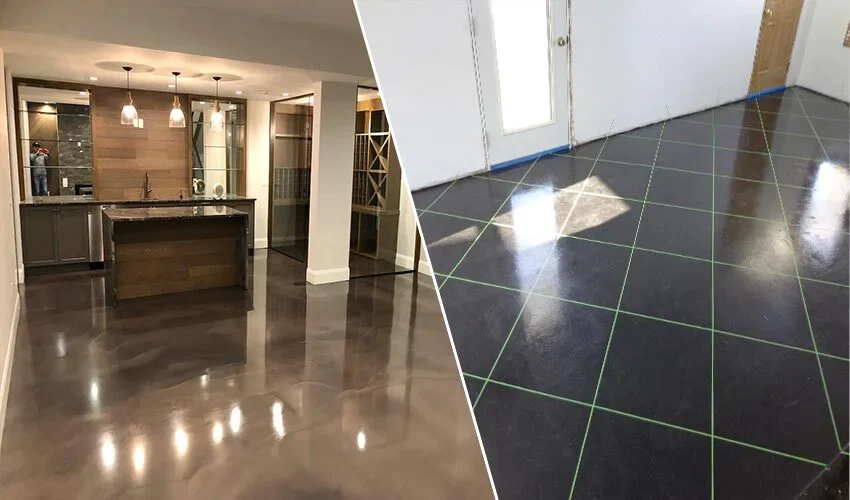
- The facility needs an upgrade to improve durability or hygiene.
- Production downtime must be minimized.
In these cases, proper surface preparation can allow a new system to bond successfully to the old one.
This saves time.
It reduces demolition waste.
It often lowers overall cost.
But only if preparation is done correctly.
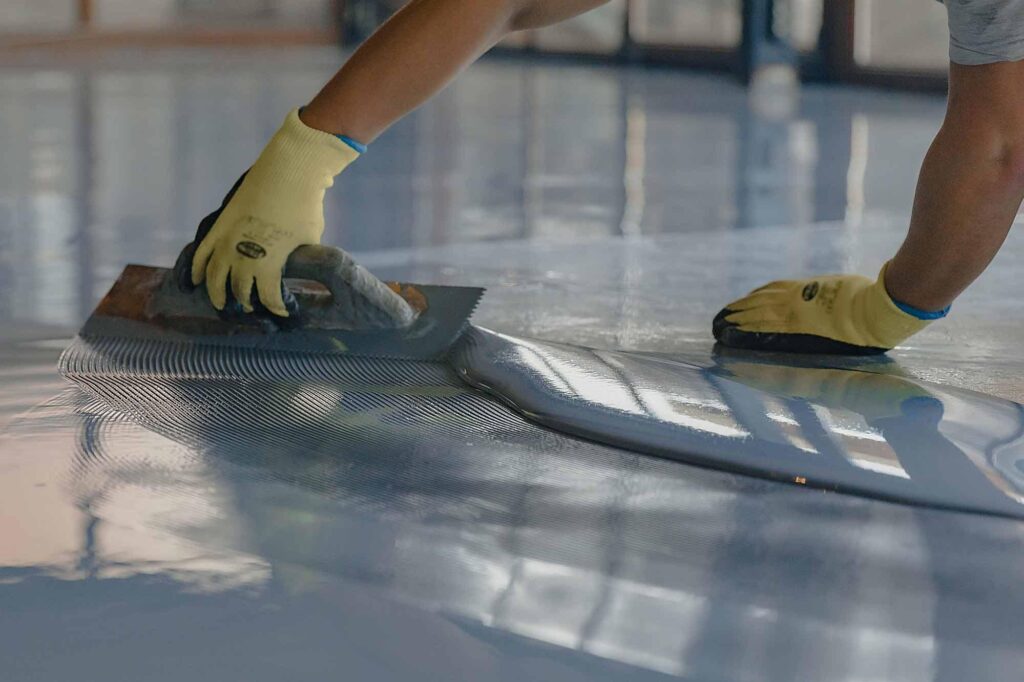
Surface Preparation Is Everything
This is where many projects either succeed or fail.
You cannot simply clean the floor and apply a new coating.
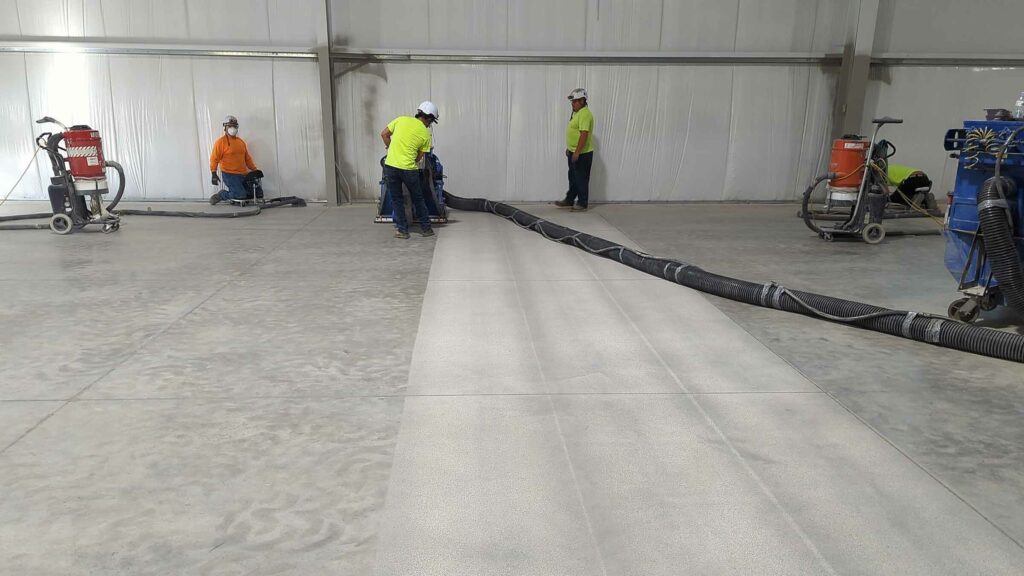
Old surfaces must be mechanically prepared — usually through grinding or shot blasting — to create the right profile for bonding.
If there’s an existing epoxy layer, it must be checked carefully.
Is it firmly bonded?
Are there hollow spots?
Is it peeling anywhere?
If the old coating is loose, applying new resin over it is like building on unstable ground.
It might look fine for a few months. Then it begins to lift.
And once delamination starts, repair becomes more complicated.
Moisture: The Silent Problem
One factor that often gets overlooked is moisture vapor transmission.
Concrete holds moisture naturally. In some buildings, especially older ones without vapor barriers, moisture can rise through the slab over time.
If new resin is applied without testing moisture levels, pressure can build beneath the coating.
That’s when you see bubbling, blistering, or peeling.
And when that happens, people blame the material.
But the real issue was trapped moisture.
Before overlaying, proper moisture testing should always be done. It’s not optional — it’s critical.
What About Installing Over Tiles?
This question comes up often.
Can resin flooring go over ceramic tiles?
Yes — but carefully.
Tiles must be firmly bonded. Any loose pieces must be removed. The glazed surface needs to be ground down so the resin can adhere properly. Grout lines should be filled to create a smooth base.
If done correctly, it can work well.
If shortcuts are taken, failure is almost guaranteed.
When Full Removal Is the Better Option
Sometimes overlaying isn’t the right answer.
If the slab has:
- Large structural cracks
- Significant movement
- Severe contamination from oil or chemicals
- Ongoing moisture issues
- Extensive delamination
Then removal and repair may be the smarter long-term choice.
Covering a weak substrate doesn’t strengthen it.
It only hides it.
And in industrial environments with heavy loads or forklift traffic, hidden weaknesses show up quickly.
The Downtime Question
One reason many facilities prefer overlays is reduced downtime.
Removing old flooring can take days or even weeks, depending on the size of the area.
Overlay systems, when planned properly, can be phased. Sections can be completed while other operations continue.
For 24/7 facilities, that flexibility is valuable.
But speed should never replace proper evaluation.
Fast installation means nothing if the floor fails early.
Longevity Depends on Honesty at the Start
The success of overlay flooring doesn’t depend only on the new material.
It depends on how honestly the existing condition is assessed.
A proper site inspection should answer:
Is the slab structurally stable?
Is moisture under control?
Are cracks repairable?
Is the old coating salvageable?
If the answer to these questions is yes, overlaying can be a smart and cost-effective solution.
If not, rebuilding may save more money long-term.
Think Beyond the Surface
Industrial flooring isn’t decoration.
It carries a load.
It handles impact.
It resists chemicals.
It supports daily operations.
So the decision to overlay shouldn’t be rushed.
Sometimes keeping the existing base makes sense.
Sometimes starting fresh is the safer move.
The right answer depends on condition — not convenience.
Final Thought
Yes, new resin flooring can often be installed over old floors.
But the real question isn’t “Can we?”
It’s “Should we?”
A strong substrate allows successful overlay. A weak one guarantees future problems.
If you’re considering upgrading your flooring, the smartest first step isn’t choosing a material.
It’s understanding what’s already beneath your feet.