
- Home
- Services
- EPOXY FLOORING
- POLYURETHANE FLOORING
- DI-ELECRIC FLOORING
- ANTI-STATIC EPOXY FLOORING
- ESD FLOORING
- ACCESS FLOORS
- CAR PARK DECK FLOORING
- CLEAN ROOM FLOORING
- HEAVY DUTY EPOXY FLOORING
- HYGIENE FLOORING
- SELF LEVELLING EPOXY FLOORING
- COLD STORAGE FLOORING
- ACID RESISTANCE FLOORING
- CAR PARK COATING
- EXPANSION JOINTS
- Projects
- Blog
- About Us
- Contact
What is industrial epoxy flooring?
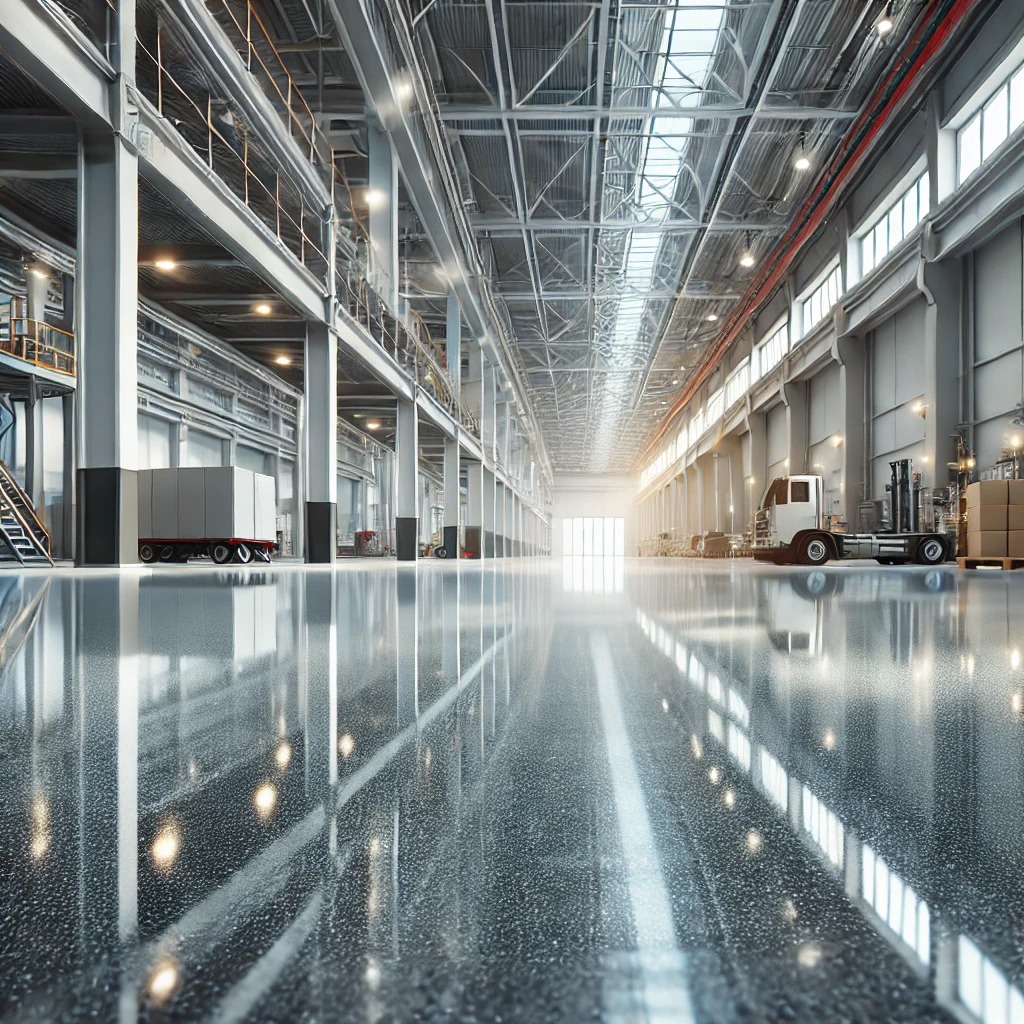
Industrial epoxy flooring is a specialized type of flooring system designed for high-performance environments such as factories, warehouses, manufacturing plants, and other industrial facilities. It is made by combining a resin and a hardener to create a strong, durable surface that adheres to the substrate (concrete or other materials).
Here’s a breakdown of its features and benefits:
Key Characteristics of Industrial Epoxy Flooring
1. High Durability
- Withstands heavy loads, high traffic, and machinery.
- Resistant to abrasion, wear, and impacts.
2. Chemical Resistance
- Protects against spills from oils, acids, solvents, and other harsh chemicals.
- Ideal for industries like pharmaceuticals, automotive, and food processing.
3. Seamless Surface
- Creates a smooth, non-porous surface that is easy to clean and maintain.
- Eliminates cracks and crevices where dirt or bacteria can accumulate.
4. Slip Resistance
- Can be customized with additives to improve traction, enhancing safety in wet or slippery areas.
5. Customizable Options
- Available in a variety of colors, patterns, and textures.
- Can incorporate safety markings, logos, or demarcation lines directly into the flooring.
6. Moisture and Thermal Resistance
- Effective in environments with temperature fluctuations or exposure to moisture.
Applications of Industrial Epoxy Flooring
- Manufacturing Plants: Withstands heavy machinery and harsh production processes.
- Warehouses: Handles forklifts, pallets, and constant movement.
- Food and Beverage Facilities: Hygienic, easy to sanitize, and compliant with FDA standards.
- Pharmaceutical Labs: Protects against spills and meets strict cleanliness requirements.
- Automotive Industry: Resists oil, grease, and tire marks in service areas and garages.
Advantages
- Longevity: Lasts 10–20 years or more with proper care, reducing maintenance costs.
- Cost-Effective: Provides long-term savings by reducing repair and replacement needs.
- Environmental Benefits: Some options are low-VOC and environmentally friendly.
- Enhanced Safety: Slip-resistant coatings and visual cues improve workplace safety.
Installation Process
- Surface Preparation: The substrate is cleaned, repaired, and primed for better adhesion.
- Application: Multiple layers of epoxy are applied, including a base coat, decorative elements (if any), and a topcoat.
- Curing Time: The epoxy is allowed to cure, forming a hard, durable surface.
Why Choose Industrial Epoxy Flooring?
- It’s an ideal solution for demanding environments requiring durability, safety, and easy maintenance.
- The seamless finish provides a professional look while standing up to the toughest conditions.
Have Any Question?
- +91 9962699888
- Sales@Chemcoats.com

- 19/10, Rangarajapuram 3rd Street, Netaji Nagar, West Jafferkhanpet, Chennai, Tamil Nadu 600083
- Sales@Chemcoats.com
- +91 9962699888