
- Home
- Services
- EPOXY FLOORING
- POLYURETHANE FLOORING
- DI-ELECRIC FLOORING
- ANTI-STATIC EPOXY FLOORING
- ESD FLOORING
- ACCESS FLOORS
- CAR PARK DECK FLOORING
- CLEAN ROOM FLOORING
- HEAVY DUTY EPOXY FLOORING
- HYGIENE FLOORING
- SELF LEVELLING EPOXY FLOORING
- COLD STORAGE FLOORING
- ACID RESISTANCE FLOORING
- CAR PARK COATING
- EXPANSION JOINTS
- Projects
- Blog
- About Us
- Contact
How does polished concrete enhance the durability of a garage floor?
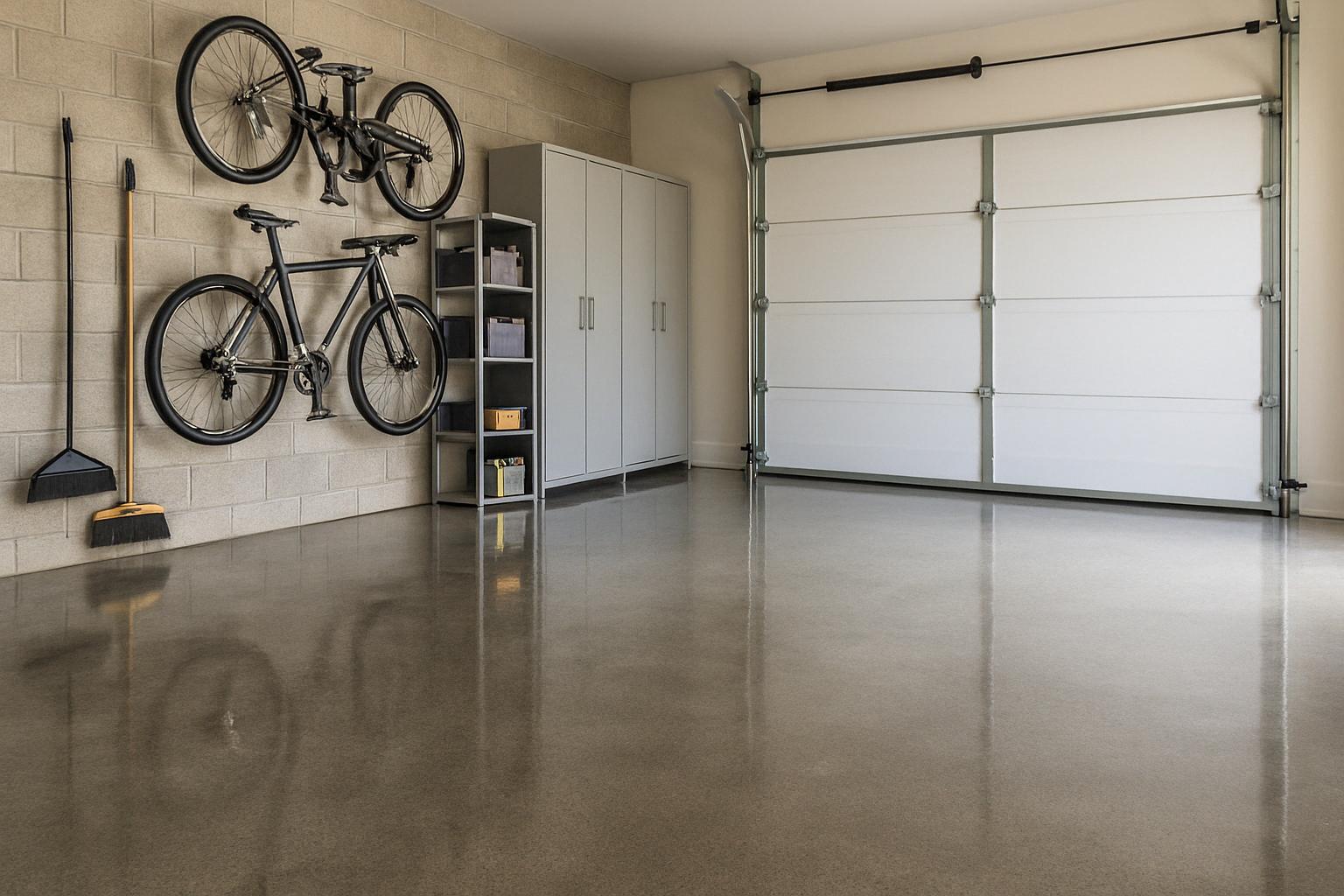
Polished concrete enhance the durability of a garage floor in a number of important ways—both structurally and as a long-term wear-and-tear factor.
1. Hardens the Surface
Polishing usually involves applying a densifier (such as a lithium or sodium silicate) that reacts with the concrete to seal pores and harden the surface.
Effect: The concrete is greatly less susceptible to abrasion, chipping, and impact.
2. Makes It Stain-Resistant
Polishing seals the pores of the concrete, so it’s less absorbent.
Oil, gas, brake fluid, and other hazards in the auto shop spills are less likely to soak in and leave permanent stains.
Applying a sealer afterward makes it even better.
3. Resists Tire Marks and Wear
Garage floors get a pounding from hot tires, tool dragging, and car weight. Polished concrete resists:
Hot tire marks and chemical scalds from hot rubber
Heavy equipment scratches
General wear from foot and vehicle traffic
4. No Coatings to Peel or Flake
Polished concrete does not have a coating that can delaminate, unlike paint or epoxy.
It’s ground and densified mechanically—so nothing is on top to bubble or peel.
This works particularly well in garages where temperature or moisture changes.
5. Dust-Proofs the Surface
Concrete inherently sheds dust through surface deterioration. Polishing seals the surface and cuts way back on that dusting.
Cleaner air, less grime on your vehicle or equipment.
Bonus: Heat and Fire Resistance
Polished concrete is fire-resistant and will not warp or deteriorate under extreme heat—great if you’re welding, grinding, or working with heavy machinery in your garage.
Have Any Question?
- +91 9962699888
- Sales@Chemcoats.com

- 19/10, Rangarajapuram 3rd Street, Netaji Nagar, West Jafferkhanpet, Chennai, Tamil Nadu 600083
- Sales@Chemcoats.com
- +91 9962699888