
- Home
- Services
- EPOXY FLOORING
- POLYURETHANE FLOORING
- DI-ELECRIC FLOORING
- ANTI-STATIC EPOXY FLOORING
- ESD FLOORING
- ACCESS FLOORS
- CAR PARK DECK FLOORING
- CLEAN ROOM FLOORING
- HEAVY DUTY EPOXY FLOORING
- HYGIENE FLOORING
- SELF LEVELLING EPOXY FLOORING
- COLD STORAGE FLOORING
- ACID RESISTANCE FLOORING
- CAR PARK COATING
- EXPANSION JOINTS
- Projects
- Blog
- About Us
- Contact
The Most Common Epoxy flooring installation Problems
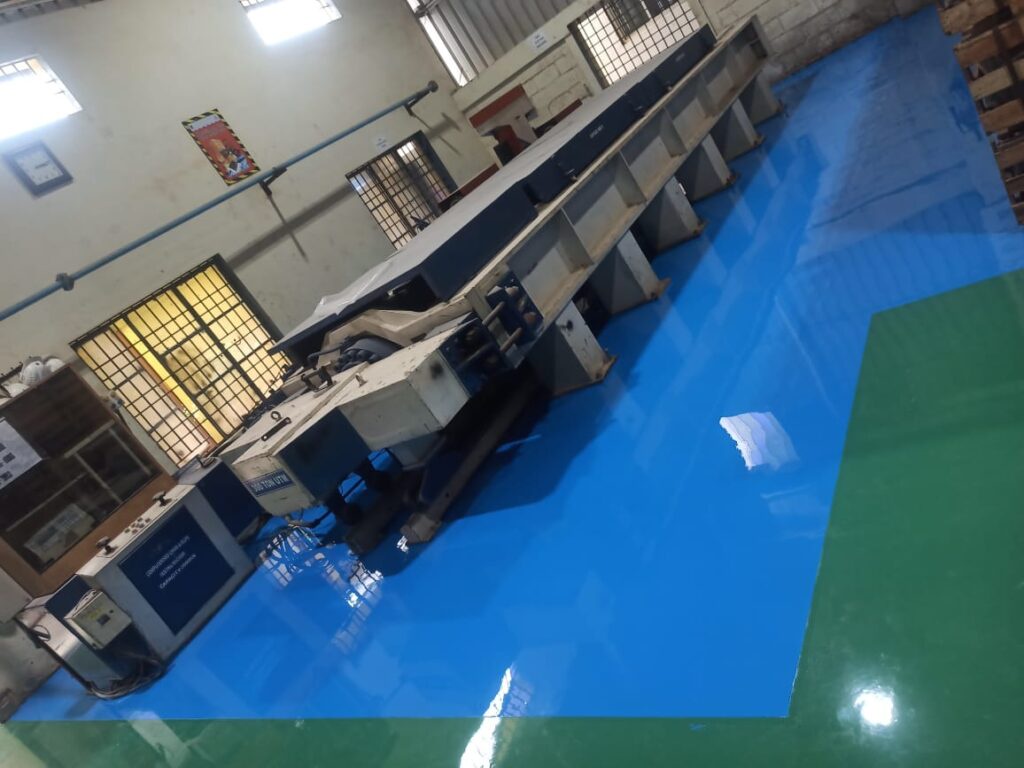
There are typically a handful of issues that installers most commonly see when installing a floor coating. The four most common are: Pin Holes, Bubbles, Fish Eyes, Dull finish. We are going to discuss the main reasons why these issues happen, how to try and prevent them from occurring, and what can be done to fix them when they do happen.
PROBLEM: PIN HOLES CAUSED BY OUT GASSING
Cause: Out Gassing from the concrete forms small (usually pin size) holes. These can become more prevalent when coating over porous concrete (old concrete that was opened up by aggressive shot blasting or when too much water was added during pour/concrete that was overworked). Applying the coating while the temperature is rising also increases the potential for outgassing.
Prevention: There are several steps you can take to try and prevent the occurrence of outgassing. Apply the coating later in the day when the temperature is falling, turn off heaters blowing warm air on the coating, and prime the surface with a low viscosity primer. Two thinner coats are always better than one thick coat.
Fix: Once it occurs, the best solution is to scrape, sand, and recoat the floor. If there are only a couple of pinholes in the floor, you may be able to spot fill them.
PROBLEM: BUBBLES IN THE COATING (USUALLY LARGER THAN PINHOLE SIZE)
Cause: Air that has been entrapped in the coating that does not have time to escape. It’s typically caused by over mixing, over rolling, and/or when cold material has a higher viscosity and can hinder air release. Coatings applied in greater thicknesses can be more susceptible since it’s harder for air to escape.
Prevention: Do not over mix or pull material into a vortex while mixing. Apply with a squeegee in both directions (overlap about 50%) and back roll in the opposite direction. These larger bubbles typically happen within the first half-hour of the coating being laid and they can be popped as they are happening.
Fix: If only a few pop up, you may be able to spot fix them and it shouldn’t be much of an issue in a basecoat. Lightly sand down any lip that may have formed and fill the area (taking care, not to over fill). If it happens on a large scale, the only solution is recoating.
PROBLEM: FISH EYES / CRAWLING IS TYPICALLY A SURFACE TENSION ISSUE WHERE THE COATING PULLS AWAY FROM ITSELF AND FORMS A CRATER.
Cause: Usually caused by concrete or prior coating being contaminated, usually with an oil or silicone. Or it can happen when applying a second coat and you miss the re-coat window.
Prevention: The most effective way to prevent this is through proper surface preparation and to make sure all contaminated areas are clean prior to installation. If the re-coat window is missed, you’ll need to sand and tack wipe the existing coating.
Fix: If the fish eyeing is occurring while you are applying the coating, then continue to back roll. You may be able to spot fix it after the coating hardens if the issue is isolated to a small area. If it’s widespread, the coating may have to be removed and then clean and degrease the concrete.
How to clean Epoxy and Polyurethane, PU floorings:
Concrete floors may be coated with epoxies, urethanes or polyurea for any number of reasons. The decision to install a seamless floor may be based upon the need to protect the concrete from abrasion, impact, or chemical exposure. Or it may relate to safety, compliance with various regulations, aesthetics,
and image or productivity enhancements. Irrespective of the decision process, a seamless floor represents an investment and with proper care and maintenance the useful service life of the floor can be measurably extended. Even though seamless floors are typically designed based upon anticipated usage, they will scratch, can be gouged, will often stain, soften or lose gloss if exposed to harsh chemicals, and may delaminate if subjected to severe thermal shock or exposed to conditions and usage exceeding those anticipated in the initial design. Consequently, both good operating practices and proper housekeeping routines are a must.
Avoid spinning forklift tires or quick stops and starts.
- Use only rubber or poly non-marking tires. Avoid swivel steel wheels.
- Loose or protruding nails should be removed from pallets or crates.
- Avoid using equipment or tools with sharp edges.
- Clean up chemical and other spills immediately to avoid potential staining, loss of gloss and potential slip hazards.
- Refrain from dragging heavy loads or equipment across the floor surface.
- Always lift a load at least 4” inches above the floor before moving the forklift. Stop the forklift before lowering the load.
- Avoid exposing the floor to sudden temperature changes greater than its design range.
- Avoid exposure to chemicals, including chemical cleaners, until full cure is achieved (typically seven days).
- Place a protective chair pad beneath chairs with swivel rollers.
Regularly inspect the floor for spot delamination, chips, bubbles and severe gouges/scratches. If any of these occur, immediately contact the original installer or Thermal-Chem Corporation. Deteriorated concrete and polymer floors do not possess any self-healing powers and problems areas always get worse with time. Early corrective action of a problem may prevent a future total floor failure. Inspect the floor for excessive wear in high traffic areas. Generally, polymer floors can be recoated with the proper surface preparation.
Daily Cleaning
All floors should be swept, dust mopped or wet mopped daily to remove dirt and debris. Spot clean heavily soiled areas by hand using a soft bristle broom, deck broom or floor scrubber with a 3M green pad.
Weekly Cleaning
There is no set pattern for determining the frequency of cleaning or the type of cleaning. Each cleaning depends on the traffic conditions, work activity, spillage and the effect from adjacent floors, walkways and their usage. These factors must be considered in establishing a routine program to fit the operation. Floors should be thoroughly cleaned using a stiff broom or mop, a hand controlled floor scrubber or mechanical scrubber. For general cleaning we recommend ArmorClean or use neutral ph cleaners, disinfectant cleaners, general-purpose cleaners or non-butyl degreasers. Some cleaners
will affect the color of or appearance of a polymer floor surface. To determine how the cleaner will perform, first test the cleaner in a small area utilizing your cleaning technique. If the cleaner or technique dulls or modifies the coating, change the cleaning material and/or the procedure. Try varying dilution ratios before establishing a regular cleaning program. Automatic floor scrubbers, which scrub and recover dirty water in one action, are the most efficient and eliminate cleaner residue typically left by hand or hand controlled floor scrubbers. Be sure and follow the mechanical floor scrubbers operating and safety procedures.
HOW TO PREVENT CONCRETE COATING FAILURE DUE TO MOISTURE
The largest financial problem in the resinous coatings industry is failure due to moisture. Some estimate this problem to cost over 1 billion dollars per year in the United States. This article will hopefully shed some light on not only the problems but how to correctly test a concrete slab for moisture.
Let’s start by looking at ways flooring can be exposed to moisture in the concrete.
- Water of Convenience: Simply stated this is the water used by the concrete company to keep the concrete “wet” enough to be able to properly place it. The typical cement to water ratio should be .45-.50, However, today we are seeing these ratios climb to give the concrete crew more time to “work” with the concrete. This water typically hydrates the curing process and then excess water evaporates.
- Improperly Installed Vapor Barrier: This is material placed before the concrete is poured with the design to block or slow down moisture from the ground finding its way into the slab. There are design standards for this, with the main goal being to reduce the permeance of water into the concrete.
- Inadequate Water Drainage: Water from rain or snow melt that doesn’t properly drain away from the building.
- Concrete Being Exposed to Rain/Snow: If the building and concrete are exposed to these weather elements before it becomes enclosed, it will add unexpected water to the concrete.
As a contractor, testing for moisture in concrete is a must. Yet it is estimated that 90% of all flooring contractors do not possess the proper testing equipment, and those who do own the equipment do not follow ASTM guidelines. The largest ASTM guideline not being accounted for is NOT TESTING A CONCRETE SLAB THAT HAS HAD AT LEAST 48 HOURS TO ACCLIMATE TO IT’S SERVICE TEMPERATURE. Improper testing leads to misinformation which leads to bad decisions which leads to flooring failures.
In today’s construction environment everything is about time and money. Building owners are anxious for their building to be ready to occupy, and the general contractor makes sure that happens. This “fast-track” method typically does not account for the 72 hours to allow a proper moisture test to be completed. If the testing is completed and shows high moisture content, there are another few days to properly install a topical moisture mitigation product, such as “chem Coats” .
Two tests that provide false negative or false positive tests are the Plastic Sheet Method and the use of a moisture meter with pins that are pushed into the concrete. If you are going to rely on these tests, it is recommended that you exclude any future problems as a result of moisture damage in the Terms and Conditions of your proposal.
The two tests that are typically accepted by ASTM and architects are the F-1869 Calcium Chloride Test and ASTM F2170 In-situ Relative Humidity. The calcium chloride test presents its results in lbs. per 1000 square feet, the relative humidity results are given in the percentage of moisture in the concrete.
Chem Coats Moisture Barrier has been independently tested lab in 2022, and the 4 samples effectively reduced moisture vapor transmission by 80%. Chem Coats is committed to helping you complete your projects from the beginning through the useful life of the products you have installed. If you have any questions, please call us 99626 99888.
Have Any Question?
- +91 9962699888
- Sales@Chemcoats.com

- 19/10, Rangarajapuram 3rd Street, Netaji Nagar, West Jafferkhanpet, Chennai, Tamil Nadu 600083
- Sales@Chemcoats.com
- +91 9962699888