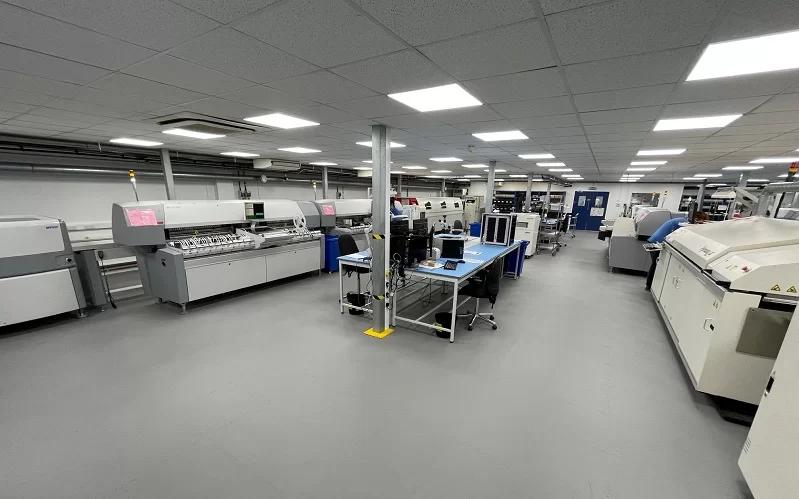
How to Select the Right Anti-Static (ESD) Flooring for Your Facility
Have you ever walked across a carpeted room in the middle of winter, reached for a metal doorknob, and felt a sudden, sharp zap? It is a minor annoyance at home. But on an industrial production line, that exact same spark is a massive financial and physical liability.
When you manage a facility that manufactures sensitive electronic components, handles volatile chemicals, or operates a pharmaceutical cleanroom, static electricity is an invisible enemy. A human being generally cannot even feel a static shock until it reaches around 3,000 volts. However, a sensitive microchip or printed circuit board (PCB) can be permanently destroyed by a discharge as low as 20 volts.
If your facility is dealing with combustible powders, solvent vapors, or high-end electronics, standard concrete and regular industrial floor coatings are not safe. You need a dedicated Electrostatic Discharge (ESD) flooring system. But navigating the world of anti-static floors can be incredibly confusing.
Here is a straightforward guide to understanding how ESD flooring works, the difference between conductive and dissipative systems, and how to choose the right one for your specific operations.
The Problem: How Floors Generate Static
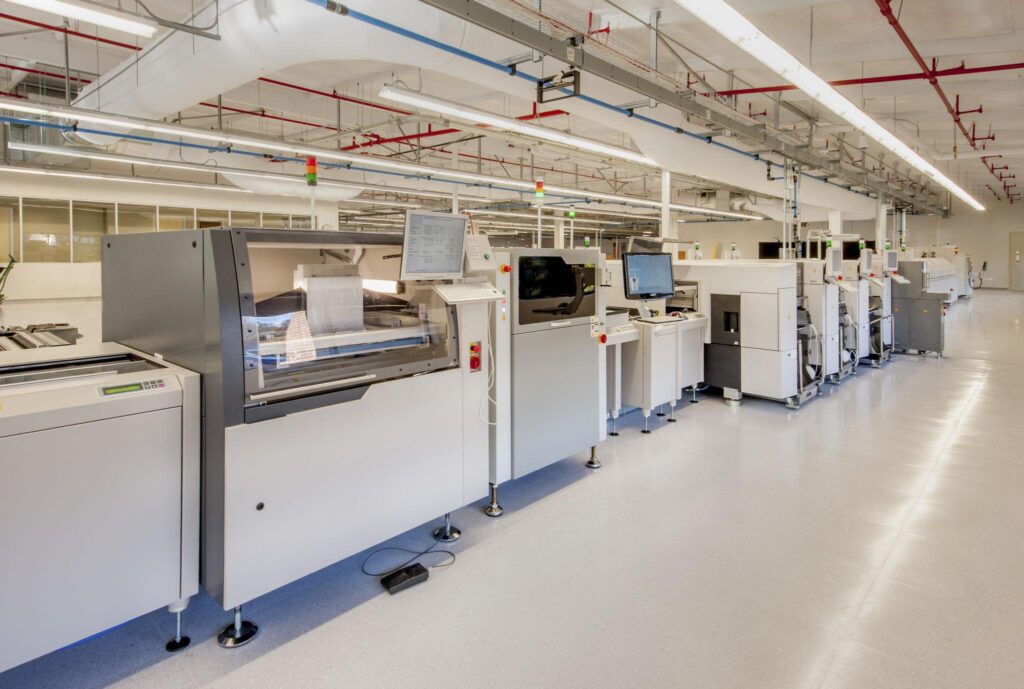
To understand the solution, you have to know how the problem starts. Static electricity is generated through a process called triboelectric charging. This is simply the friction created when two materials separate—like the rubber sole of a worker’s boot lifting off the surface of a standard epoxy floor.
As a worker walks down an aisle, they are constantly generating and storing an electrical charge in their body. Standard concrete and basic floor coatings are insulators. They trap that electrical charge inside the worker. The moment that worker touches a grounded object—like a stainless steel workbench or a sensitive electronic component—all that stored electricity forcefully shoots out of their finger to ground itself. That is the spark that fries a motherboard or ignites a chemical vapor.
The Solution: How ESD Flooring Works
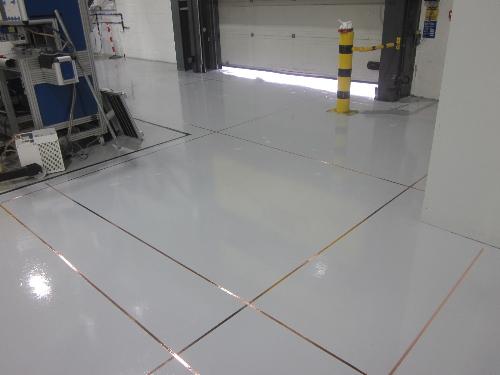
An ESD flooring system flips this dynamic. The floor is designed to conduct, not insulate. During installation, special conductive substances are added to the resinous floor coating. These substances are usually carbon fibers or metallic pigments. Copper grounding tape is then laid down beneath the coating and physically wired into the building’s electrical ground.
When a worker walks across an ESD floor, the static charge doesn’t build up in their body. Instead, the floor instantly grabs that charge, pulls it through the carbon pathways in the floor coating, and safely drains it away into the earth. No buildup means no spark.
Dissipative vs. Conductive: Knowing the Difference
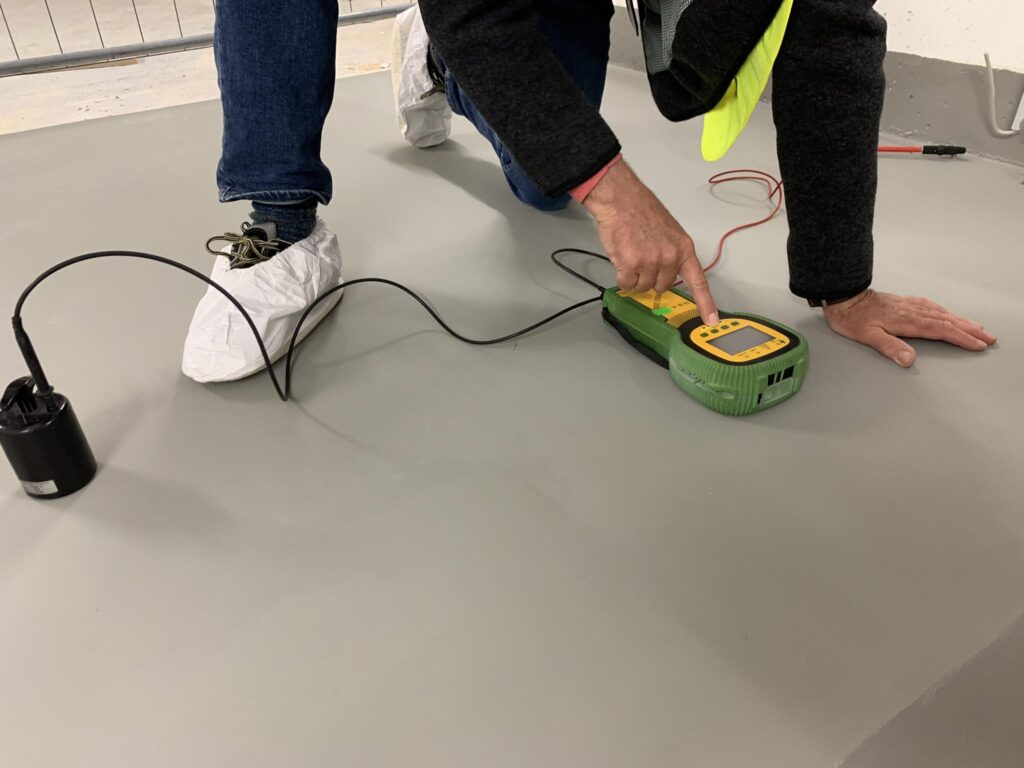
This is the exact point where many facility managers make a very expensive mistake. “Anti-static” is just a generic umbrella term. When you actually specify an ESD floor, you have to choose between two very different electrical resistance ranges: Static Dissipative and Static Conductive.
Resistance is measured in ohms. The lower the resistance, the faster the electricity travels.
1. Static Conductive Flooring
- The Resistance: $2.5 \times 10^4$ to $1 \times 10^6$ ohms.
- How it acts: This floor drains electrical charges incredibly fast.
- Where to use it: Conductive floors are mandatory in extreme environments where even a microscopic spark could cause a literal explosion. You will find these floors in munitions manufacturing facilities, chemical processing plants, and areas handling highly flammable solvents.
2. Static Dissipative Flooring
- The Resistance: $1 \times 10^6$ to $1 \times 10^9$ ohms.
- How it acts: This floor drains electrical charges in a slower, much more controlled manner.
- Where to use it: This is the standard for the electronics manufacturing industry. If the floor drains electricity too fast, it can actually pull a charge out of a piece of equipment so violently that it damages the internal components. Dissipative floors drain the charge gently, protecting server rooms, PCB assembly lines, and high-tech cleanrooms.
Why Seamless Epoxy Beats ESD Vinyl Tiles
When shopping for ESD flooring, you will usually find two material options: interlocking vinyl tiles and poured seamless epoxy. For heavy industrial use, the poured epoxy system wins almost every time.
Why? Because of dirt.
Vinyl tiles have hundreds of seams where the edges meet. Over time, heavy foot traffic and sweeping push microscopic dust and dirt down into those seams. Dirt is an insulator. Eventually, the dirt buildup breaks the electrical connection between the tiles, creating “dead spots” on your floor where static can suddenly build up again.
A poured ESD epoxy floor is 100% seamless. There are no joints for dirt to hide in. You get a perfectly continuous electrical pathway across the entire room, combined with the heavy-duty structural impact resistance that epoxy is famous for.
The Missing Link: Your Employees’ Footwear
Here is a hard truth about ESD flooring: you can spend fifty thousand dollars on a state-of-the-art conductive epoxy floor, and it will be completely useless if your employees are wearing standard rubber-soled sneakers.
Remember, rubber is an insulator. If a worker is wearing thick rubber boots, the static charge gets trapped in their body because the rubber prevents it from reaching the floor. To make an ESD flooring system work, it has to function as a complete circuit. Your workers must wear specialized ESD footwear or conductive heel straps that maintain a physical electrical connection with the floor at all times.
Making the Right Choice
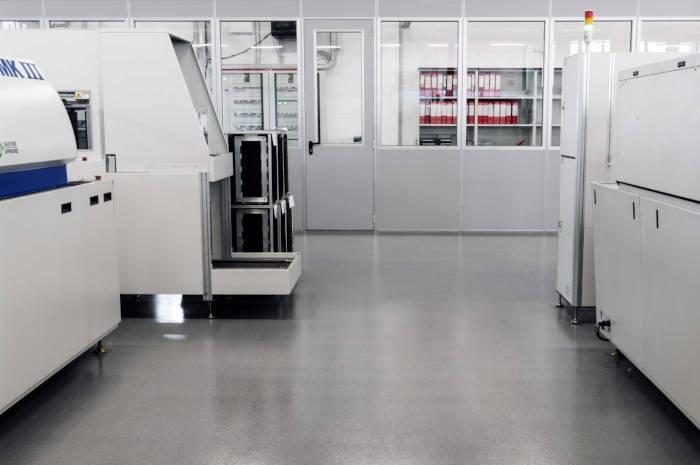
Guessing wrong on your electrical resistance levels isn’t just an aesthetic issue; it can result in failed compliance audits, destroyed inventory, and severe safety hazards. Getting it right requires a careful analysis of your specific manufacturing environment and safety goals.
Don’t leave your sensitive electronics or cleanrooms to chance. Speak with our ESD flooring specialists today to find the perfect static-control solution.