Essential Data Center Flooring Requirements and Best Practices
You can spend millions of dollars outfitting a room with the latest high-density server racks, liquid cooling systems, and redundant power grids. But if you ignore the surface sitting directly beneath all that hardware, you are putting your entire operation at risk.
In a standard commercial warehouse, a poorly planned floor is just a maintenance headache. Inside a data center, it is a catastrophic liability. Server rooms are incredibly sensitive environments. A single spark of static electricity or a microscopic metal fiber floating through the air can short out a motherboard, corrupt hard drives, and trigger massive facility downtime.
Whether you are retrofitting an aging local server room or pouring concrete for a massive new cloud storage facility, your flooring specification has to be perfect. Here is a look at the non-negotiable requirements and industry best practices for modern data center flooring.
1. Killing the Static Threat (ESD Control)
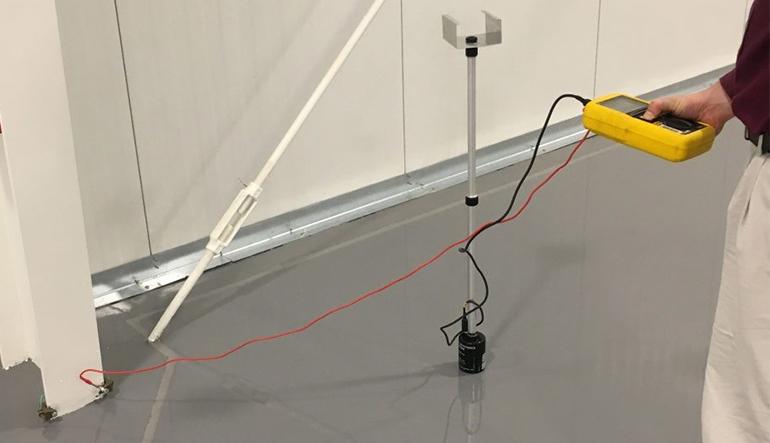
Let’s start with the biggest invisible threat in any server room: static electricity. As your IT technicians walk down the aisles, the simple friction of their shoes against the floor generates a static charge that gets stored in their bodies.
If they reach out and touch a metal server chassis to swap a blade, that stored electricity instantly discharges. You might not even feel a static shock until it hits around 3,000 volts. But here is the terrifying part for data centers—it only takes a discharge of about 20 volts to permanently fry a sensitive microchip.
The Best Practice: You absolutely must install Static Dissipative Flooring. You cannot use standard concrete sealers or basic commercial tiles. Professional flooring contractors use specialized ESD (Electrostatic Discharge) epoxy flooring coatings that contain conductive pathways. Instead of trapping the electrical charge in a worker’s body, the floor grabs the charge the moment they step on it and safely drains it away into the building’s ground wire. No stored charge means no spark.
2. Handling Extreme Point Loads
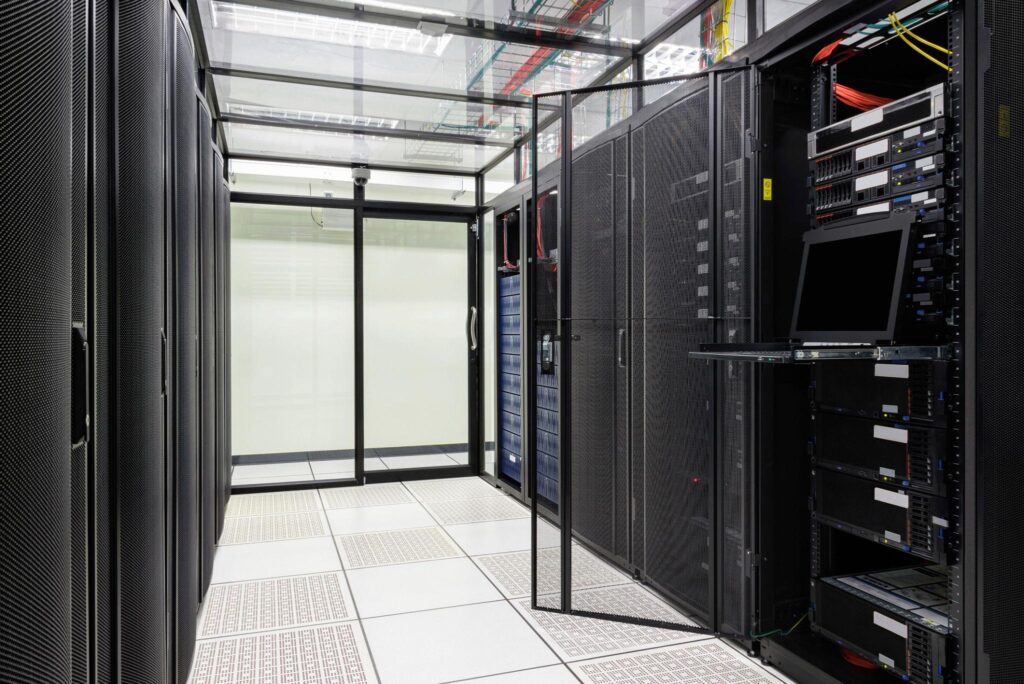
Servers are heavy, and as technology packs more computing power into smaller spaces, they are only getting heavier. A fully loaded, high-density server cabinet can easily tip the scales at 3,000 pounds.
The problem is how that weight is distributed. That entire 3,000-pound load isn’t spread out evenly; it is concentrated entirely onto four tiny leveling feet or caster wheels.
The Best Practice: If you try to park a high-density cabinet on standard commercial flooring, those tiny metal wheels will eventually crush right through the material, leaving permanent craters. You need a high-build industrial epoxy flooring or a urethane system that boasts massive compressive strength. These poured resinous floors easily absorb heavy point-loading without denting, shifting, or cracking the concrete slab below.
3. Eliminating “Zinc Whiskers” and Concrete Dust
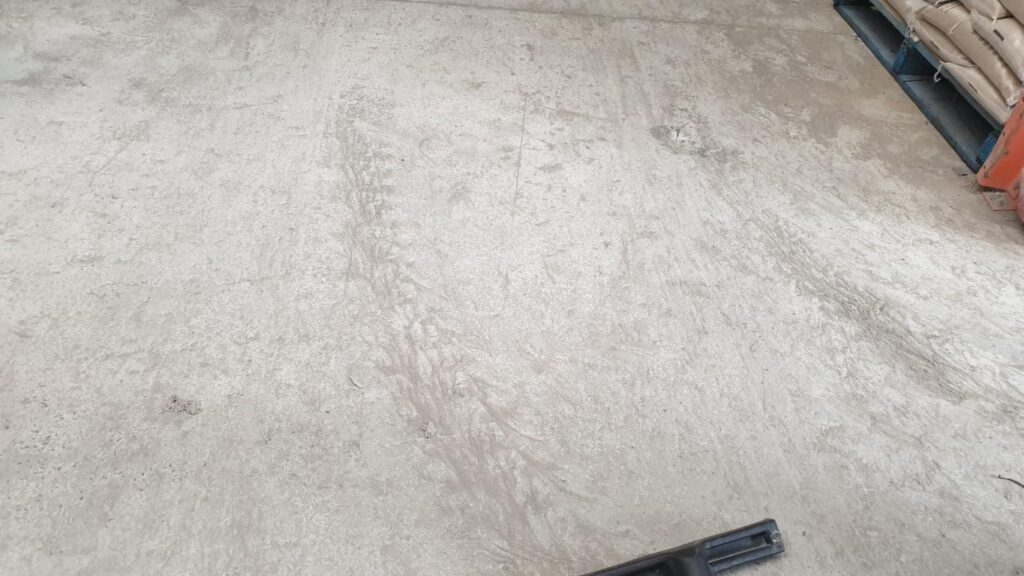
Data centers live and die by their HVAC systems. Airborne dust is the enemy of thermal management. When dust gets sucked into a server’s cooling fans, it coats the internal heat sinks, forcing the processors to overheat and throttle their performance.
Bare concrete naturally sheds microscopic silica dust as foot traffic wears it down. But there is a far more dangerous issue found in older server rooms called “zinc whiskers.” Older raised-floor systems were built using galvanized steel panels. Over time, the zinc coating on the underside of those panels actually grows microscopic, highly conductive metal fibers. If a zinc whisker breaks off, floats into the cooling intake, and lands on a circuit board, it creates a tiny electrical bridge that instantly shorts out the hardware.
The Best Practice: To keep the room functioning like a cleanroom, the floor must be totally non-shedding. A fluid-applied epoxy coating permanently seals the concrete, trapping all dust. If you are using a raised floor grid, swap out old galvanized panels for factory-finished ESD epoxy panels to permanently eliminate the zinc whisker threat.
4. The Big Debate: Raised Access Floor vs. Solid Slab
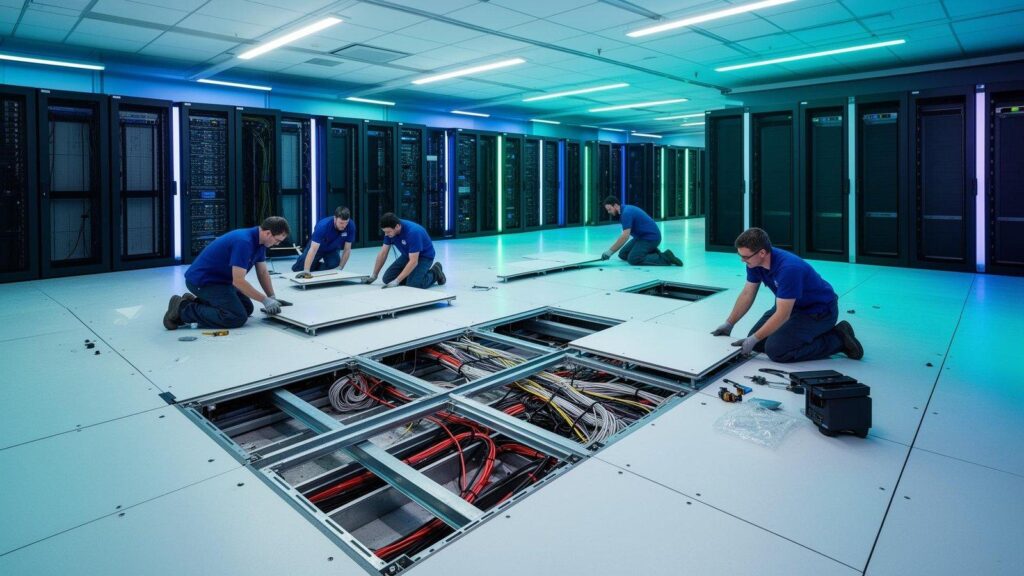
If you look at the architectural trends in data center construction, you’ll notice a massive shift in how floors are structured. For decades, the raised access floor—a grid of elevated panels—was the undisputed standard. Today, many hyperscale facilities are abandoning them.
- The Raised Floor Approach: These floors are great because they hide massive cable bundles completely out of sight. They also allow facility managers to push freezing cold AC air beneath the floor and vent it directly up into the server racks through perforated tiles. Utilizing a certified Access Floors Service provides the ultimate flexibility for routing complex data links. However, they have strict weight limits, they eventually rattle underfoot, and the dark space underneath is notorious for trapping dirt.
- The Solid Slab Approach: Massive modern data centers are increasingly opting to just pour a perfectly flat, solid concrete slab and coat it in heavy-duty ESD epoxy. Because there is no hollow floor grid, there are zero weight restrictions. It is infinitely easier to keep clean. The tradeoff? All of your power cables and cooling ducts have to be mounted in overhead trays.
5. Utilizing the Floor for Better Lighting
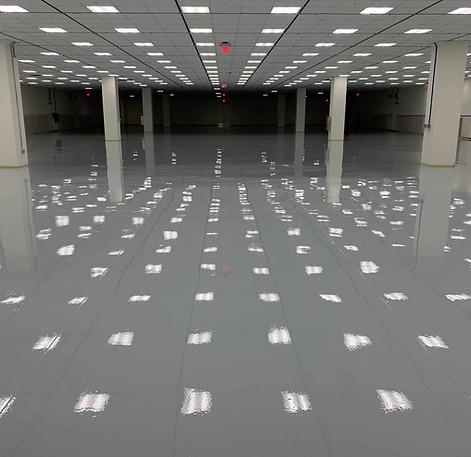
Server aisles are dense, narrow, and heavily shadowed by rows of black cabinets. It is notoriously difficult for technicians to see what they are doing on the bottom racks. You could install more overhead lighting, but powerful lights generate heat, which forces your cooling system to work harder.
The Best Practice: Make the floor do the work. When specifying an epoxy or polyaspartic coating, choose a high-gloss finish in a light, reflective color like pale gray or white. A highly reflective floor catches the existing overhead light and bounces it right back up into the server racks. It drastically improves visibility for your technicians and can actually reduce your monthly energy bill.
Bottom Line
A data center floor is a highly technical piece of equipment. Ignoring the chemistry beneath your server racks is a gamble you cannot afford to take.
Protect your servers from static shock and concrete dust. Contact Chemcoats to design a seamless, high-performance floor for your data center.