How to Assess Slip Resistance on Existing Industrial Epoxy Floors
Industrial epoxy flooring is widely used in manufacturing plants, warehouses, workshops and other industrial facilities because of its durability and ease of maintenance. However, even a well-installed floor can become slippery when exposed to oil, grease, water, cleaning residues or gradual surface wear.
For facility managers, plant engineers and maintenance teams, identifying these risks early is essential to maintaining a safer working environment.
Industrial floor slip resistance testing helps assess how a floor performs under specified conditions. A proper assessment combines visual inspection, identification of contaminants, review of the existing flooring system and, where necessary, professional slip-resistance testing.
This guide explains how to assess slip resistance on existing industrial epoxy floors, identify potential problems and determine the appropriate corrective action.
Why Does Industrial Epoxy Flooring Become Slippery?
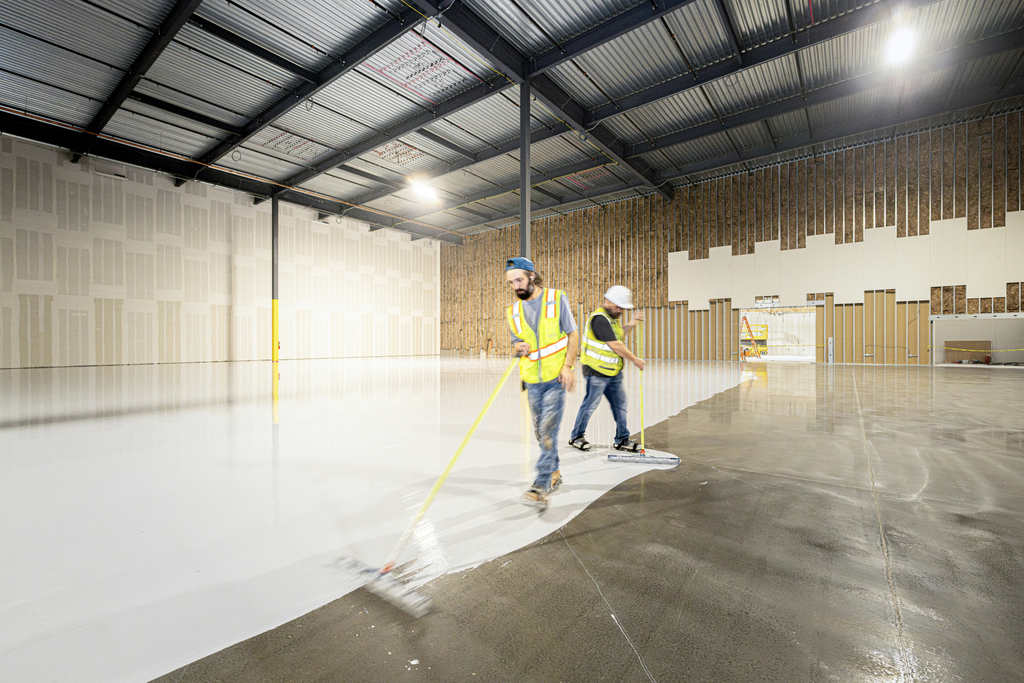
A slippery epoxy floor does not always indicate coating failure. The problem may be related to surface contamination, maintenance practices, wear or the original surface finish.
1. Oil, grease and chemical contamination
Manufacturing facilities often expose floors to lubricants, hydraulic oil, grease and process chemicals. These substances can form a film on the floor and affect the traction available between footwear and the surface.
In some cases, a floor may appear clean while a thin residue remains.
2. Water and cleaning residues
Water from washdown operations, leaks or production processes can affect floor slip resistance. Detergent residues and unsuitable cleaning procedures may also contribute to slippery conditions.
Areas exposed to frequent washing or liquid spills require particular attention.
3. Surface wear and polishing
Repeated pedestrian traffic, trolley movement and equipment operations can gradually change the surface texture of an epoxy coating.
Depending on the flooring system and the pattern of wear, these changes may affect slip resistance under certain operating conditions.
4. Changes to the original anti-slip texture
Some industrial epoxy flooring systems incorporate textured finishes or anti-slip aggregates to provide additional traction.
Over time, wear, repairs, incompatible recoating or maintenance practices may change the original surface profile. This can result in differences in performance between sections of the same floor.
5. Poor drainage and recurring moisture
Water accumulation around production equipment, washdown zones, entrances and floor transitions can create recurring slip hazards.
If water repeatedly accumulates in the same area, investigate the underlying drainage or process issue rather than relying only on surface treatments.
Understanding the cause of a slippery floor is the first step towards selecting an appropriate solution.
How to Assess Slip Resistance on an Existing Epoxy Floor
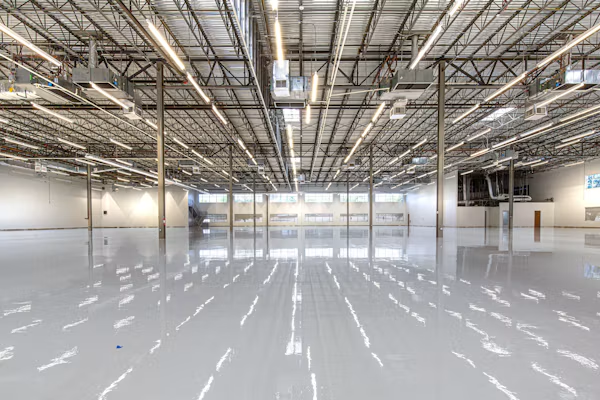
A systematic assessment helps identify problem areas and determine whether further testing is required.
Step 1: Conduct a visual floor inspection
Start by inspecting the areas where employees walk, turn, handle materials or work around machinery.
Look for the following warning signs:
- Smooth or visibly worn patches.
- Oil, grease or chemical residue.
- Standing water or recurring wet areas.
- Peeling, chipping or damaged coating.
- Differences in texture between original and repaired sections.
- Locations associated with slip complaints or near misses.
Record the affected locations and take photographs where appropriate. Compare the observations with previous inspection records to identify changes over time.
Important: Visual inspection can identify potential problems, but it cannot provide a numerical measurement of slip resistance or confirm that a floor is safe under every operating condition.
Step 2: Identify the actual operating conditions
Slip resistance should be assessed in relation to how the floor is used.
For example:
- Manufacturing areas: Check for lubricants, process fluids and residue around machinery.
- Washdown areas: Consider water, cleaning agents and the frequency of wet operations.
- Warehouses: Inspect pedestrian routes, loading zones and areas where external moisture may enter.
- Maintenance areas: Look for oil spills, grease and residue from equipment servicing.
- Packaging areas: Assess locations where liquids or product residues may accumulate.
Document when the problem occurs. A floor may perform differently during dry production, after cleaning or when exposed to a specific contaminant.
These observations help determine which conditions should be considered during professional testing.
Step 3: Review the original flooring specifications
If the original installation records are available, review the technical documentation for the existing epoxy flooring system.
Check the following details:
- Product and coating system installed.
- Specified surface finish and texture.
- Any documented slip-resistance test results.
- Test method and conditions used.
- Manufacturer recommendations for cleaning and maintenance.
- Previous repair, recoating or resurfacing work.
Original product data can help establish what was specified during installation. However, it does not automatically confirm the current performance of a floor that has experienced years of use.
Step 4: Consider wet and contaminated conditions
One common mistake is assessing a floor only when it is dry.
Where the workplace regularly experiences water, oil, cleaning solutions or other contaminants, the assessment should consider those real operating conditions.
A competent specialist should determine the appropriate testing conditions and procedure for the specific facility.
Do not deliberately spill liquids or introduce contaminants into an active workplace to conduct an informal test. Any testing involving wet or contaminated surfaces should be properly planned and controlled.
Step 5: Arrange professional slip-resistance testing
When inspection findings or workplace incidents indicate a potential problem, professional slip-resistance testing may be appropriate.
Common assessment methods include:
Pendulum testing
The pendulum test uses a controlled sliding contact to assess the slip resistance of a surface under a specified procedure. The results depend on the test method, surface conditions and other relevant factors.
Tribometer testing
A tribometer measures frictional properties using a defined testing procedure. The suitability of a particular instrument depends on the flooring surface, test conditions and intended application.
Other standardised methods
Ramp-based and other specialist methods may be appropriate for certain materials, applications or assessment requirements.
These methods are not automatically interchangeable. Results obtained using different instruments, procedures or conditions should not be treated as equivalent without appropriate technical justification.
Before testing, establish which locations need to be assessed, which conditions are relevant, which method will be used and how the results will be interpreted.
Step 6: Interpret the test results correctly
A slip-resistance test report should be evaluated in the context of the facility’s operating conditions and applicable safety requirements.
Review whether the report identifies:
- The test method and equipment used.
- The locations tested.
- Whether the surface was dry, wet or exposed to a specified contaminant.
- The recorded readings and their interpretation.
- The assessment criteria applied.
- Any limitations affecting the results.
- Recommended follow-up actions.
There is no single numerical result that should automatically be applied to every industrial floor, regardless of its use and conditions.
A competent specialist should explain what the results mean for the particular flooring system and workplace.
Step 7: Determine the appropriate corrective action
Once the potential cause has been identified and the findings reviewed, determine the next step.
| Assessment finding | Possible corrective action |
| Oil, grease or removable residue | Review cleaning procedures and use compatible cleaning products |
| Recurring water accumulation | Investigate drainage, leaks and washdown practices |
| Localised coating damage | Arrange a technical inspection to determine whether local repair is suitable |
| Widespread change in surface texture | Assess whether compatible resurfacing or recoating is appropriate |
| Unsatisfactory results under relevant conditions | Obtain a specialist assessment and corrective action plan |
| Different results across floor zones | Investigate each zone according to its operating conditions |
Cleaning may help when removable contamination is the cause. However, it will not necessarily resolve worn surface texture, coating damage or an unsuitable original finish.
Similarly, applying an anti-slip treatment without investigating the underlying issue may not deliver the expected result.
Any proposed coating or surface treatment should be compatible with the existing system, substrate, chemicals, cleaning procedures and traffic conditions.
Industrial Floor Slip-Resistance Assessment Checklist
Facility managers can use this checklist during an initial inspection.
- Identify locations with reported slips or near misses.
- Record visible wear, smooth patches and coating damage.
- Identify exposure to water, oil, grease and chemicals.
- Review cleaning products and maintenance procedures.
- Check drainage and recurring contamination sources.
- Review the original flooring specification and technical documentation.
- Determine whether professional slip-resistance testing is necessary.
- Select a suitable test method for the actual operating conditions.
- Review the findings against applicable assessment criteria.
- Document corrective actions and arrange follow-up inspections.
This checklist supports an initial review. It does not replace a formal workplace risk assessment or specialist testing where required.
Common Mistakes When Assessing Industrial Floor Slip Resistance
Assuming a rough-looking floor is always safe
Visible texture alone cannot establish how a surface will perform with different footwear, moisture levels and contaminants.
Relying only on dry-floor observations
A dry surface may behave differently when exposed to water or process residues. Assessment should consider the conditions employees actually encounter.
Comparing results from different test methods without context
Different instruments and procedures may measure or report different properties. Test results must be interpreted using the relevant method and assessment criteria.
Applying an anti-slip coating without investigating the cause
Contamination, drainage problems, worn texture and coating damage require different responses. Identify the problem before choosing a corrective system.
Ignoring differences between repaired and original areas
A repaired or recoated section may have a different texture from the surrounding floor. Include these areas in the assessment when relevant.
Frequently Asked Questions
How can I tell if my industrial epoxy floor is too slippery?
Look for recurring slip complaints, smooth or worn patches, contamination, water accumulation and changes in surface texture. These signs indicate that further investigation may be necessary. Where objective measurement is required, arrange suitable professional testing.
How is epoxy floor slip resistance tested?
Depending on the application, testing may involve a pendulum tester, tribometer or another suitable standardised method. The choice depends on the floor surface, operating conditions and the purpose of the assessment.
Does a dry-floor test prove that an epoxy floor is safe when wet?
No. Dry conditions do not necessarily represent wet or contaminated workplace conditions. The assessment should account for the conditions that occur during normal operations.
Can cleaning improve the slip resistance of epoxy flooring?
Cleaning may improve traction when removable oil, grease or residue is responsible for the problem. It will not necessarily correct surface wear, coating damage or an unsuitable finish.
Should a slippery industrial epoxy floor be replaced?
Not necessarily. Depending on the findings, improved cleaning, maintenance, local repair, compatible resurfacing or replacement may be appropriate. The decision should be based on the cause, the condition of the existing system and the intended use of the area.
How often should industrial floors be assessed for slip resistance?
Inspection frequency should reflect the operating environment, traffic, contamination, cleaning practices, previous incidents and applicable workplace requirements. Reassess the floor when operating conditions change or recurring concerns arise.
Conclusion
Assessing slip resistance on existing industrial epoxy floors requires more than checking the surface appearance or relying on how it feels underfoot. A proper assessment considers contamination, surface wear, actual operating conditions, original flooring specifications and suitable testing where necessary.
These findings help facility managers identify potential hazards and determine whether cleaning improvements, maintenance, technical repair or resurfacing should be considered.
For industrial facilities reviewing their existing flooring systems, Chemcoats can be contacted to discuss flooring requirements and suitable system options for the operating environment.