Choosing an industrial flooring contractor is about more than comparing the price per square foot.
Two contractors can quote the same epoxy, PU or ESD flooring system and still deliver very different results. The difference may come from substrate assessment, surface preparation, coating thickness, application methods, quality control, project management and experience with the specific operating environment.
A contractor who understands your factory’s traffic, machinery, chemicals, hygiene requirements, ESD requirements and production schedule can make a much more appropriate recommendation than a contractor who simply offers a standard flooring package.
If you are comparing industrial flooring companies in Chennai or elsewhere in South India, the 12 questions below can help you evaluate contractors before signing a contract.
Direct Answer
Before choosing an industrial flooring contractor, ask about their relevant project experience, substrate inspection process, moisture testing, surface preparation, recommended flooring system, coating thickness, warranty, completed projects, installation schedule, quality-control procedures, handover documentation and post-installation support.
The best contractor is not necessarily the one offering the lowest quotation. Look for a contractor who can explain why a particular flooring system is suitable for your facility, what preparation is required, how quality will be verified and what is included in the final scope.
Quick Answer: 12 Questions to Ask an Industrial Flooring Contractor
| # | Question | Why it matters |
| 1 | What experience do you have with facilities like mine? | Tests relevant industry experience |
| 2 | How will you assess my existing floor? | Reveals whether the quote is based on actual conditions |
| 3 | What surface preparation will you use? | Preparation strongly affects adhesion |
| 4 | Why are you recommending this flooring system? | Shows whether the specification is customized |
| 5 | What thickness and layer build-up are included? | Helps compare quotations accurately |
| 6 | What does your warranty cover? | Clarifies accountability |
| 7 | Can you show relevant completed projects? | Provides evidence of experience |
| 8 | How will you work around production? | Tests project-management capability |
| 9 | What quality checks are performed during installation? | Shows how quality is controlled |
| 10 | What documentation will I receive at handover? | Creates an objective project record |
| 11 | What happens if unexpected substrate problems are found? | Tests transparency |
| 12 | What maintenance and after-sales support do you provide? | Protects long-term performance |
Why Is Choosing the Right Industrial Flooring Contractor Important?
Industrial flooring is a system, not simply a layer of paint applied to concrete.
Its performance can depend on:
- substrate condition;
- moisture;
- surface preparation;
- primer selection;
- resin chemistry;
- coating thickness;
- application conditions;
- curing;
- traffic;
- chemical exposure;
- cleaning methods; and
- maintenance.
For example, a warehouse floor carrying frequent forklift traffic has different requirements from an electronics manufacturing area requiring ESD control. A pharmaceutical facility may prioritize hygiene and cleanability, while a chemical processing plant may require specific chemical resistance.
Chemcoats currently offers industrial flooring systems including epoxy, polyurethane, ESD, anti-static, dielectric, heavy-duty, self-leveling, cleanroom and hygiene flooring, allowing the system to be selected according to the facility’s requirements.
1. What Experience Do You Have With Facilities Similar to Mine?
This should be one of the first questions you ask.
A contractor experienced in warehouse flooring does not automatically have the same expertise required for:
- pharmaceutical flooring;
- cleanrooms;
- electronics manufacturing;
- ESD flooring;
- chemical processing;
- food manufacturing;
- heavy manufacturing;
- cold storage; or
- high-traffic logistics facilities.
Ask for specifics
Instead of asking:
“How many years have you been doing flooring?”
also ask:
“Have you completed projects with operating conditions similar to ours?”
Look for evidence such as:
- project type;
- industry;
- floor area;
- flooring system;
- traffic conditions;
- chemical exposure;
- specialist requirements; and
- project location.
Chemcoats states that it has 17+ years of flooring experience and more than 100 completed projects across South India, with experience involving companies including Foxconn, Luxshare and Mondelez.
That type of specific project evidence is more useful than a generic statement such as “we are experienced.”
2. How Will You Assess the Existing Concrete Floor?
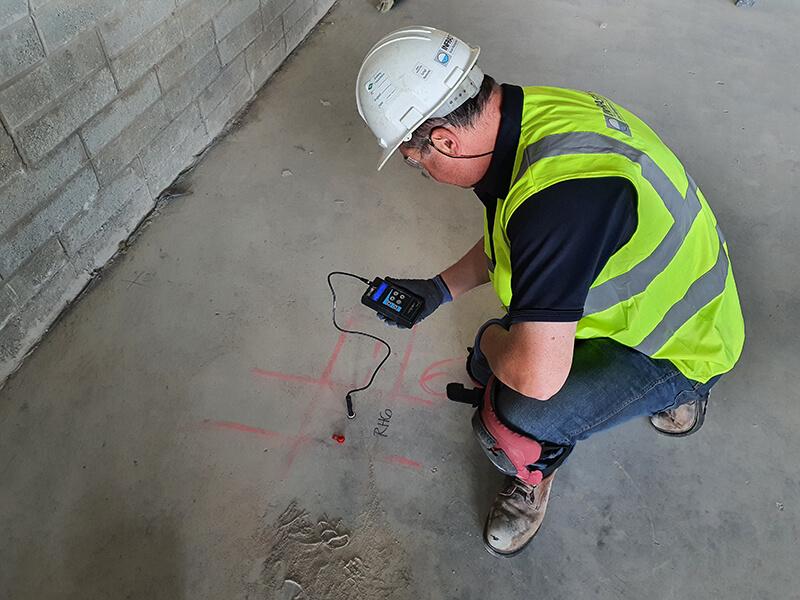
A professional contractor should want to understand the substrate before finalizing a flooring recommendation.
Ask whether the contractor will assess:
- concrete condition;
- moisture;
- cracks;
- surface profile;
- contamination;
- existing coatings;
- floor levelness;
- joints;
- drainage; and
- damaged areas.
A quotation based entirely on floor area can miss significant preparation requirements.
This is especially important for existing factories where the concrete may have been exposed to years of:
- forklift traffic;
- oil;
- chemicals;
- impact;
- cleaning;
- repairs; and
- production activity.
For more information, see the industrial flooring site survey guide and use it as a checklist when reviewing a contractor’s site-assessment process.
3. What Surface Preparation Method Will You Use?
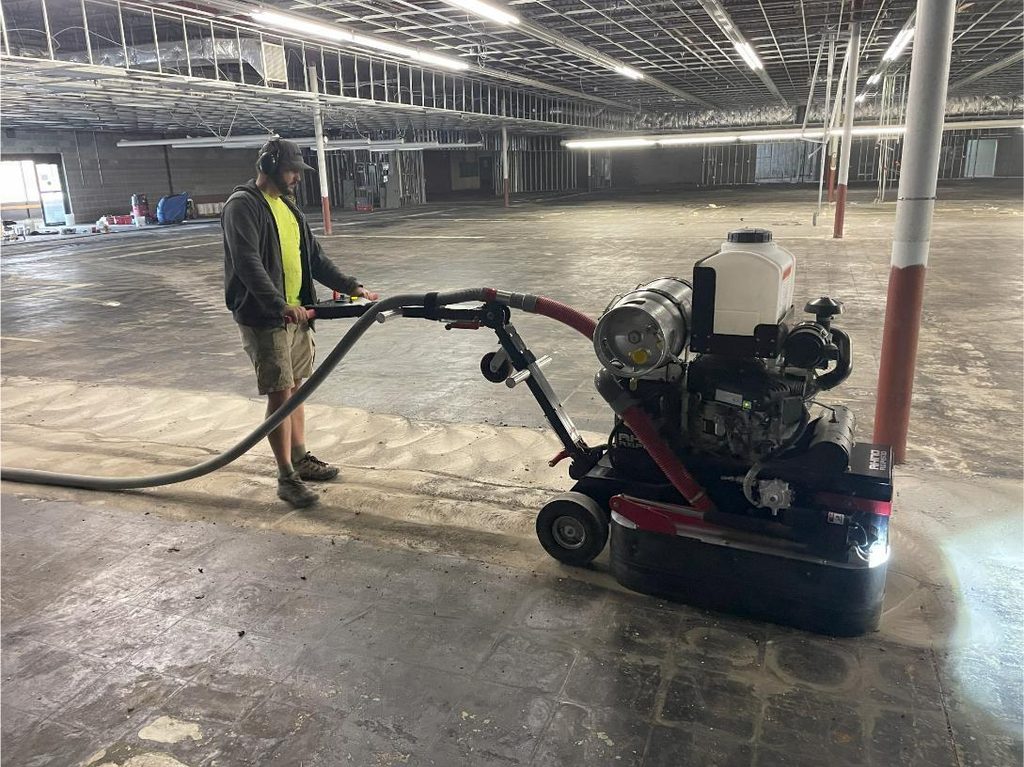
Ask the contractor to explain exactly how the concrete will be prepared.
Potential methods include:
- diamond grinding;
- shot blasting;
- mechanical abrasion;
- scarification where appropriate;
- removal of existing coatings;
- crack repair;
- degreasing; and
- localized concrete repairs.
The correct method depends on the actual substrate.
A contractor who automatically specifies the same preparation method for every project may not be assessing the floor closely enough.
Chemcoats describes substrate preparation as a key part of its process, including mechanical grinding, cleaning and moisture testing before coating application.
4. Why Are You Recommending This Flooring System?
Don’t accept:
“We always use epoxy.”
Ask:
“Why is this particular system appropriate for our operating conditions?”
The answer should consider:
- forklift traffic;
- pedestrian traffic;
- machinery;
- chemicals;
- cleaning;
- temperature;
- humidity;
- impact;
- abrasion;
- hygiene;
- ESD requirements; and
- expected service conditions.
For example, epoxy may be appropriate for many industrial applications, while polyurethane or another system may be more appropriate for specific thermal, chemical or mechanical conditions.
Chemcoats provides both epoxy and PU flooring solutions, along with specialist systems for ESD, cleanroom, hygiene and heavy-duty applications.
5. What Thickness and Layer Build-Up Are Included?
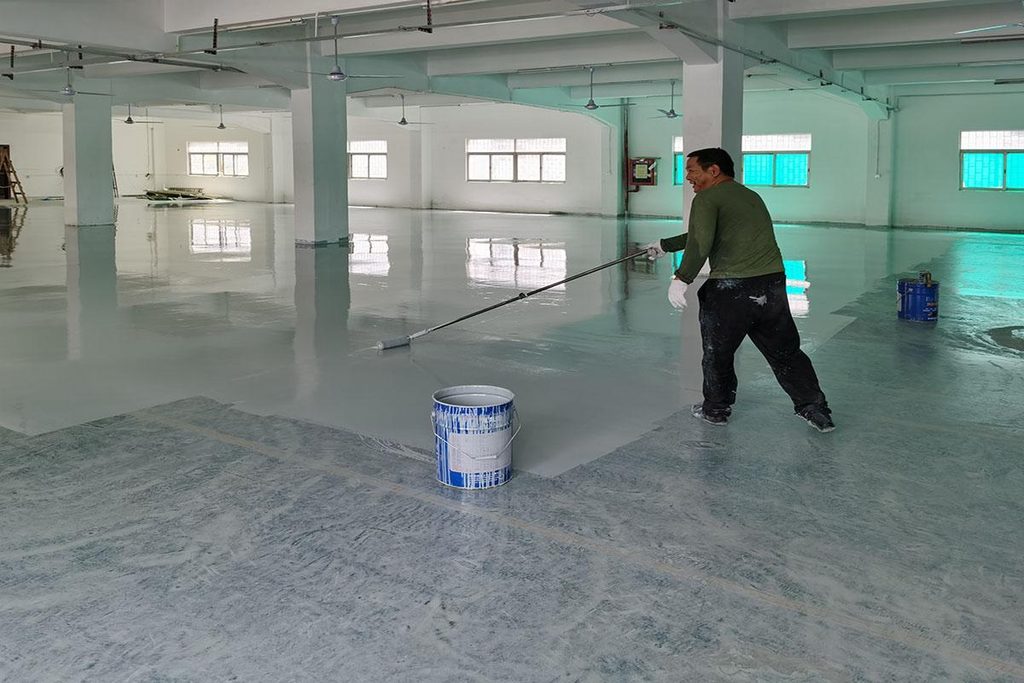
This is one of the most important questions when comparing quotations.
Don’t compare:
“Epoxy flooring — ₹X per sq. ft.”
without knowing what that price includes.
Ask for:
- primer;
- intermediate/body coat;
- topcoat;
- total system thickness;
- number of coats;
- aggregate or broadcast material, where applicable;
- surface preparation;
- crack repair;
- coving;
- joint treatment; and
- other inclusions.
A quotation for a thin coating should not be compared directly with a multi-layer heavy-duty flooring system.
Ask for the specification in writing
The contractor should identify the proposed system and its expected build-up rather than relying on a product name alone.
6. What Does Your Warranty Cover?
A warranty should never be treated as a verbal promise.
Ask:
- How long is the warranty?
- Does it cover material?
- Does it cover workmanship?
- What conditions apply?
- What maintenance is required?
- What situations void the warranty?
- Are structural movement or substrate problems excluded?
- Who is responsible if the coating delaminates?
Chemcoats states on its website that it provides warranty and guarantee support for its products and systems.
Before signing, request the actual written warranty document and make sure its terms match the contract.
7. Can You Show Me Relevant Completed Projects?
A contractor’s completed projects can tell you more than a sales presentation.
Ask to see projects involving similar:
- industries;
- floor systems;
- traffic;
- floor area;
- chemical exposure; or
- specialist requirements.
Chemcoats’ published project portfolio includes projects associated with Foxconn, Luxshare, Mondelez, Syrma SGS and FLEX, among others.
The company’s FLEX project is particularly relevant to ESD flooring: Chemcoats describes developing an anti-static flooring strategy for an electronics/semiconductor manufacturing environment and states that third-party testing was used as part of its quality process.
That is the type of evidence prospective customers should look for when evaluating a specialist flooring contractor.
8. How Will You Work Around Our Production Schedule?
Industrial flooring is often installed inside operating facilities.
Ask:
- Can you work in phases?
- How long does each zone require?
- When can pedestrian traffic resume?
- When can forklifts return?
- What is the curing period?
- Can installation occur during shutdowns?
- What happens if the schedule changes?
- How will adjacent production areas be protected?
A technically excellent flooring system can still create problems if the installation schedule is unrealistic.
Chemcoats states that it plans installations around production schedules and has experience with projects requiring plant shutdowns and time-sensitive completion.
9. What Quality Checks Are Performed During Installation?
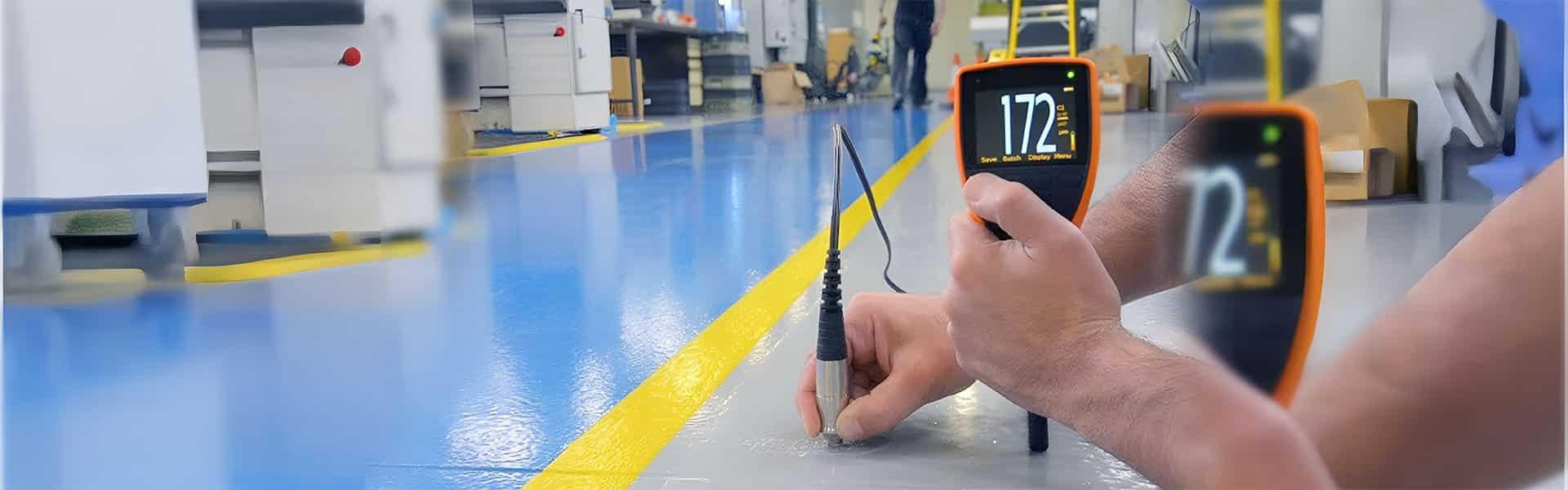
Don’t ask only:
“Do you provide quality control?”
Ask what is actually checked.
Depending on the system, quality-control activities may include:
- substrate inspection;
- moisture testing;
- surface preparation verification;
- environmental condition monitoring;
- coating thickness verification;
- adhesion testing where specified;
- electrical resistance testing for ESD flooring;
- visual inspection; and
- final handover inspection.
Chemcoats describes quality checks throughout its project process and its FLEX project specifically refers to quality gates and third-party testing for the ESD flooring system.
10. What Documentation Will I Receive at Handover?
Ask the contractor to define the handover package before work starts.
Depending on the project, documentation may include:
- product technical data sheets;
- product batch information;
- substrate test results;
- moisture readings;
- coating thickness records;
- electrical resistance results for ESD systems;
- inspection records;
- warranty;
- maintenance instructions;
- completion documentation.
For specialist flooring, documentation can be particularly important.
Chemcoats’ published FLEX project describes third-party testing as part of verifying conductivity, durability and safety requirements.
11. What Happens If You Find Unexpected Substrate Problems?
This question tests how the contractor handles problems.
For example, preparation may reveal:
- weak concrete;
- extensive contamination;
- hidden cracks;
- high moisture;
- poorly bonded old coatings;
- unexpected repairs;
- uneven substrate.
Ask:
“What is your process if additional work is required?”
A good process should explain:
- how the problem is identified;
- how it is documented;
- whether photographs/test results are provided;
- what remedial work is recommended;
- how the additional cost is calculated; and
- who approves the additional work.
This avoids disagreements halfway through the project.
12. What Maintenance and Support Do You Provide After Handover?
The flooring project does not necessarily end when the contractor leaves.
Ask about:
- cleaning chemicals;
- cleaning equipment;
- recommended cleaning frequency;
- repairs;
- recoating;
- inspection;
- warranty claims;
- technical support.
This matters particularly for ESD and specialist flooring.
Chemcoats’ anti-static flooring information emphasizes appropriate maintenance to preserve static-control performance and states that the company provides support after project completion.
Contractor Comparison Scorecard
Use the following table when comparing three industrial flooring contractors.
| Evaluation area | Contractor A | Contractor B | Contractor C |
| Relevant industry experience | /10 | /10 | /10 |
| Site assessment | /10 | /10 | /10 |
| Moisture testing | /10 | /10 | /10 |
| Surface preparation | /10 | /10 | /10 |
| Flooring specification | /10 | /10 | /10 |
| Thickness/DFT clarity | /10 | /10 | /10 |
| Warranty | /10 | /10 | /10 |
| Completed projects | /10 | /10 | /10 |
| Quality control | /10 | /10 | /10 |
| Handover documentation | /10 | /10 | /10 |
| Production planning | /10 | /10 | /10 |
| After-sales support | /10 | /10 | /10 |
| Total | /120 | /120 | /120 |
This makes it much easier to compare contractors on value and technical capability, rather than price alone.
What Should Be Included in an Industrial Flooring Quotation?
Before comparing prices, make sure each contractor is quoting against a comparable scope.
A professional quotation should ideally identify:
Substrate preparation
- grinding/shot blasting;
- cleaning;
- crack repairs;
- existing coating removal;
- leveling.
Flooring system
- product/system;
- primer;
- intermediate coats;
- topcoat;
- aggregate;
- total thickness.
Detailing
- coving;
- expansion joints;
- construction joints;
- drains;
- penetrations.
Project management
- manpower;
- equipment;
- working hours;
- protection;
- mobilization.
Handover
- testing;
- inspection;
- warranty;
- maintenance instructions.
If one quotation is significantly cheaper, check which of these items is missing before concluding that the contractor is offering better value.
Red Flags When Choosing an Industrial Flooring Contractor
Red Flag 1: No Site Assessment
A contractor gives a final quote without properly understanding the substrate.
Red Flag 2: Same Flooring System for Every Application
The contractor recommends the same epoxy system regardless of chemicals, traffic, temperature or specialist requirements.
Red Flag 3: No Clear Thickness
The quotation simply says “epoxy flooring” without specifying system build-up.
Red Flag 4: Preparation Is Not Included
The quote focuses on coating material but provides little detail about concrete preparation.
Red Flag 5: Verbal Warranty Only
The contractor promises a warranty but will not provide written terms.
Red Flag 6: No Relevant Project Evidence
The contractor claims extensive experience but cannot demonstrate comparable completed work.
Red Flag 7: Unrealistic Completion Time
The contractor promises an unusually fast installation without explaining preparation and curing requirements.
Red Flag 8: No Quality Documentation
The contractor cannot explain what will be tested or documented at handover.
Questions to Ask for Different Industrial Environments
Pharmaceutical and Food Manufacturing
Ask about:
- hygiene requirements;
- seamless detailing;
- cleaning chemicals;
- washdown;
- coving;
- chemical resistance;
- regulatory requirements.
Electronics and Semiconductor Facilities
Ask about:
- ESD requirements;
- conductive vs static-dissipative systems;
- grounding;
- electrical resistance testing;
- ESD compliance;
- third-party testing.
Chemcoats has published material specifically addressing ESD flooring selection and discusses conductive versus static-dissipative systems in its ESD guidance.
Warehouses
Ask about:
- forklift traffic;
- wheel loading;
- turning areas;
- abrasion;
- impact;
- racking;
- loading zones.
Chemical Plants
Ask about:
- exact chemicals;
- concentration;
- exposure frequency;
- spill duration;
- cleaning;
- chemical-resistance data.
Data Centers
Ask about:
- ESD/static control;
- equipment movement;
- access-floor interfaces;
- maintenance;
- grounding;
- electrical resistance testing.
Why Price Alone Is a Poor Way to Compare Flooring Contractors
Suppose three contractors quote:
- Contractor A: ₹X/m²
- Contractor B: ₹X + 15%
- Contractor C: ₹X + 30%
The cheapest quotation may look attractive.
But if Contractor A is providing:
- thinner coating;
- less preparation;
- fewer coats;
- no crack repairs;
- no testing; or
- a shorter warranty,
the three prices are not actually comparable.
The better question is:
What flooring system and scope am I receiving for this price?
Compare:
Preparation + materials + thickness + application + testing + warranty + project management
—not simply the price per square foot.
How to Choose an Industrial Flooring Contractor in Chennai
If your project is in Chennai, evaluate local contractors based on both technical capability and relevant project experience.
Chemcoats currently describes itself as a Chennai industrial flooring contractor serving Southern India and lists more than 17 years of experience and 100+ completed projects.
When comparing an industrial flooring company in Chennai, look for evidence of:
- local project experience;
- industrial flooring specialization;
- site assessment;
- surface preparation capability;
- specialist flooring systems;
- documented quality control;
- project references;
- warranty;
- production scheduling; and
- post-installation support.
You can explore Chemcoats’ industrial flooring services to compare the company’s range of epoxy, PU, ESD, anti-static, dielectric, heavy-duty and specialist flooring solutions.
Why Chemcoats Is Worth Including in Your Contractor Shortlist
Chemcoats states that it has 17+ years of experience and more than 100 completed projects across South India, with experience across electronics, pharmaceutical and manufacturing environments.
Its published services include:
- Epoxy Flooring
- Polyurethane Flooring
- ESD Flooring
- Anti-Static Epoxy Flooring
- Heavy-Duty Epoxy Flooring
- Self-Leveling Epoxy Flooring
- Cleanroom Flooring
- Hygiene Flooring
- Dielectric Flooring
- Expansion Joint Treatment.
The company also publishes project information, including an ESD flooring project for FLEX’s electronics manufacturing facility, where it describes quality gates and third-party testing.
This type of publicly documented project information is exactly what customers should look for when evaluating a flooring contractor.
Benefits of Proper Contractor Selection
Better Technical Fit
The flooring system is selected according to the facility’s actual requirements.
More Transparent Pricing
A detailed scope makes contractor quotations easier to compare.
Better Project Planning
Preparation, curing and production restrictions are considered before work starts.
Lower Risk of Avoidable Problems
Moisture, contamination and preparation requirements can be identified before installation.
Stronger Accountability
Written specifications, testing and warranty terms establish clearer expectations.
Better Long-Term Value
The objective is not simply the lowest installation cost, but a flooring system that performs for its intended operating environment.
Typical Contractor Selection Example
This is a representative example, not a specific client project.
A manufacturing company receives three industrial flooring quotations.
Contractor A offers the lowest price but provides little information about preparation or coating thickness.
Contractor B provides a detailed specification but has limited experience with the company’s chemical exposure.
Contractor C conducts a site assessment, asks about forklift traffic and cleaning chemicals, provides a detailed system build-up, explains the preparation method, supplies relevant project references and provides written warranty conditions.
Contractor C is not the cheapest quotation, but the facility manager can clearly understand what is being installed, why it was selected and how its performance will be verified.
That makes the third quotation easier to evaluate on value rather than price alone.
Standards and Technical Considerations
The applicable technical requirements depend on the flooring system and facility.
Depending on the project, a contractor may need to address:
- concrete moisture;
- substrate preparation;
- coating thickness;
- adhesion;
- environmental conditions;
- chemical resistance;
- slip resistance;
- ESD/static-control requirements;
- electrical resistance;
- hygiene requirements; and
- curing conditions.
For ESD flooring, don’t simply ask whether the floor is “anti-static.” Ask the contractor to identify the required electrical performance, test method and acceptance criteria for your facility.
Chemcoats’ ESD guidance discusses conductive and static-dissipative flooring and references ANSI/ESD S20.20-related requirements.
For expansion joints, the contractor should also consider movement and joint design rather than simply coating over the joint. Chemcoats’ published expansion-joint guidance discusses movement, thermal effects and joint treatment.
Always confirm the exact requirements applicable to your project with the product manufacturer, relevant standards and qualified technical professionals.
Frequently Asked Questions
How many industrial flooring contractors should I compare?
Three is a practical starting point. The important point is to give each contractor the same project information and compare the scope, not simply the price.
Should I choose the cheapest industrial flooring contractor?
Not automatically. First verify preparation, coating thickness, system specification, testing, warranty and project scope.
Should an industrial flooring contractor inspect the site before quoting?
Ideally, yes. Existing concrete condition, moisture, contamination, cracks and access conditions can significantly affect the required scope.
What should I ask about epoxy flooring thickness?
Ask for the complete system build-up, including primer, body coats, topcoat and expected total thickness.
What should an industrial flooring warranty include?
It should clearly state the warranty period, coverage, exclusions, maintenance requirements and procedure for making a claim.
How can I verify a flooring contractor’s experience?
Ask for relevant completed projects, client references, photographs, project specifications and examples involving similar operating conditions.
What is more important: flooring material or installation quality?
Both matter. A technically appropriate material can still perform poorly if the substrate is unsuitable or preparation and application are inadequate.
How do I compare two epoxy flooring quotations?
Compare the preparation method, coating system, thickness, number of coats, repairs, detailing, testing, warranty and exclusions before comparing price.
Does a flooring contractor need experience with my industry?
For specialized applications, relevant experience can be particularly valuable because pharmaceutical, electronics, chemical, food and heavy-manufacturing environments can have very different requirements.
What should happen if unexpected cracks or moisture are discovered?
The contractor should document the condition, explain the implications, recommend remedial action and obtain approval for additional work before proceeding where the issue changes the agreed scope.
People Also Ask
- How do I choose an industrial flooring contractor?
- What should I look for in an epoxy flooring company?
- How do I compare industrial flooring quotations?
- What questions should I ask an epoxy flooring contractor?
- How much does industrial epoxy flooring cost?
- What should an industrial flooring quotation include?
- How long does industrial epoxy flooring last?
- What makes a good industrial flooring contractor?
- How do I verify an industrial flooring company’s experience?
- What warranty should I expect from an industrial flooring contractor?
- Is epoxy or PU flooring better for industrial floors?
- How do I choose an ESD flooring contractor?
Conclusion
Choosing an industrial flooring contractor should involve much more than comparing the final price.
Ask about relevant experience, substrate assessment, moisture testing, surface preparation, flooring selection, thickness, warranty, completed projects, production scheduling, quality control, handover documentation and after-sales support.
The strongest contractors should be able to explain not only what flooring system they recommend, but also why it is suitable for your facility, how the concrete will be prepared, how quality will be checked and what happens if site conditions differ from expectations.
For companies evaluating industrial flooring contractors in Chennai and South India, Chemcoats has published evidence of 17+ years of experience, 100+ projects and specialist flooring capabilities across industrial, pharmaceutical and electronics environments.
Don’t choose an industrial flooring contractor based on price alone. Choose based on evidence, technical process, relevant experience and clearly defined scope.