Let’s set the scene. You are walking through a busy food processing plant, and right in the middle of the main corridor, a massive chunk of the floor coating is peeling up. It looks terrible, sure. But worse than that? It is a giant red flag for the next health inspector who walks through the door, and a major trip hazard for your heavy equipment operators. A failing floor isn’t just a visual eyesore; it is a direct hit to your operational uptime.
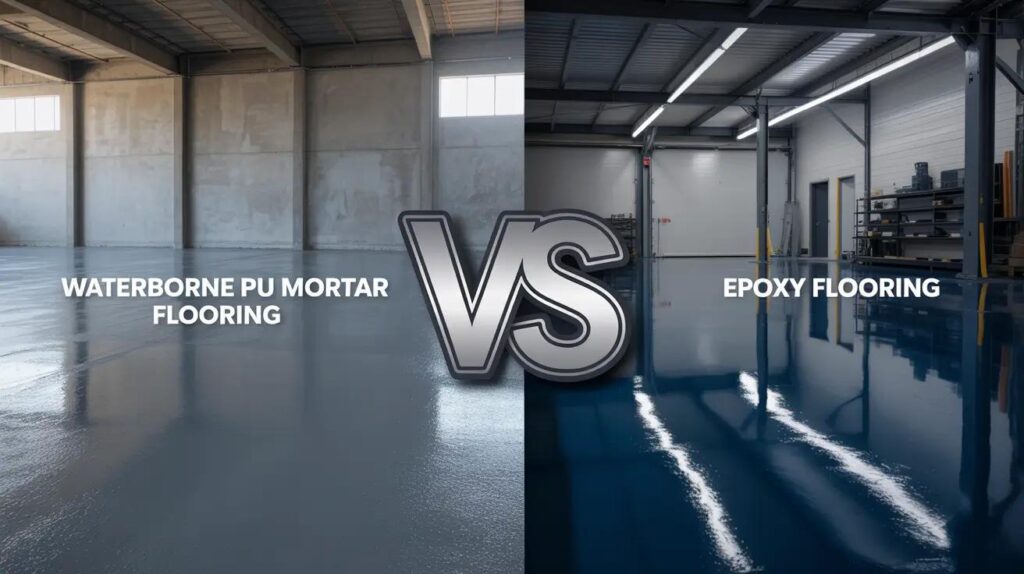
When facility managers decide it is time to upgrade their concrete slabs, they usually face the same big debate: do we go with industrial epoxy, or do we lay down cementitious urethane?
On paper, they sound like they accomplish the exact same goal. Both systems are fluid-applied over bare concrete. Both cure into a rock-hard, seamless barrier. Both are designed to take an absolute beating day in and day out. But if you treat these two materials interchangeably, you are setting yourself up for a very expensive failure.
Let’s break down exactly what makes these two resinous powerhouses so fundamentally different, and how to figure out which one actually belongs in your facility.
The Heavy Hitter: Cementitious Urethane
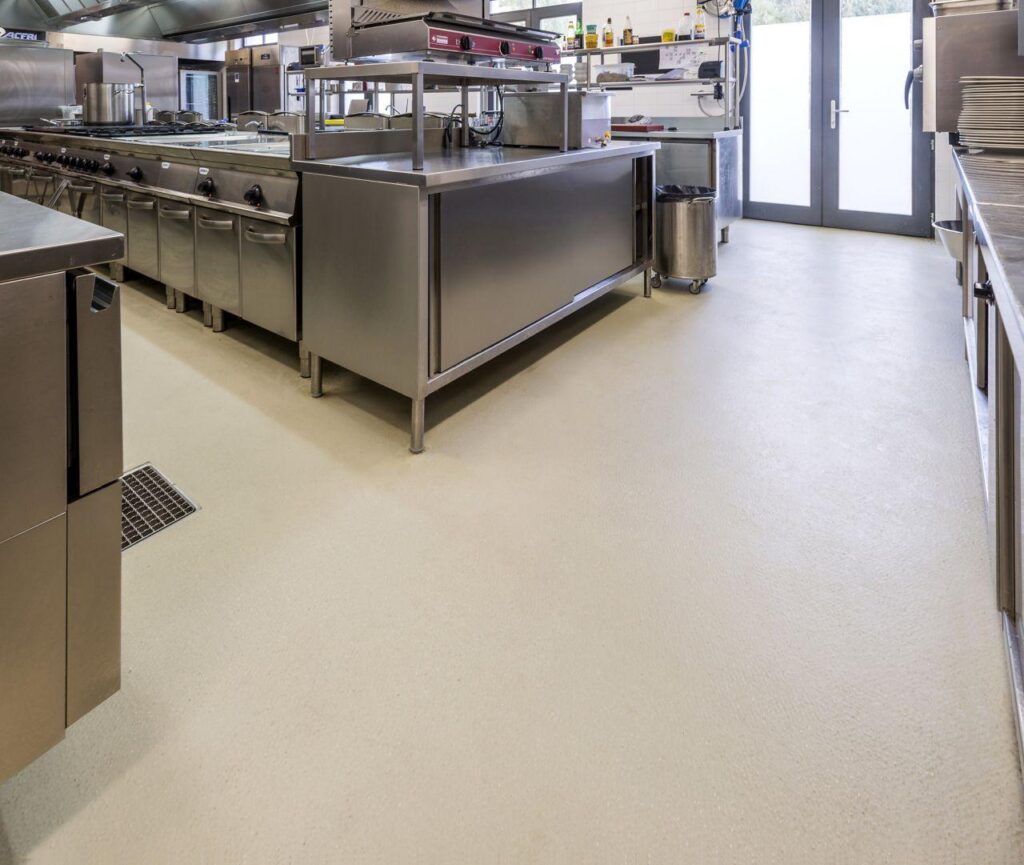
Think of cementitious urethane (often called urethane cement) as the absolute tank of the industrial flooring world. It is a unique hybrid product that mixes advanced urethane polymer technology with traditional cement and specialized aggregate blends. Because it literally contains cement, it behaves a lot like the concrete sitting directly beneath it.
What it does best (The Pros): Thermal shock is where this material truly earns its paycheck. If your sanitation crew regularly dumps boiling hot water on a freezing cold floor during routine washdowns, standard floor coatings will snap, crack, and pop right off the slab. Cementitious urethane expands and contracts right along with the concrete. No popping, no peeling.
It also laughs at heavy moisture. Concrete is essentially a giant, hard sponge that constantly pushes water vapor up from the earth. While that vapor destroys standard paint, urethane cement breathes. You can even install it on freshly poured concrete that hasn’t fully cured yet, which is a massive lifesaver for tight construction schedules. Finally, if your facility processes milk, animal fats, or citrus juices, the organic acid resistance here is virtually unbeatable.
The drawbacks (The Cons): Let’s be honest—it is not exactly pretty. You install urethane cement for brute-force survival, not to impress visitors with a high-gloss showroom finish. It usually comes in flat, basic, utilitarian colors like gray, red, or blue.
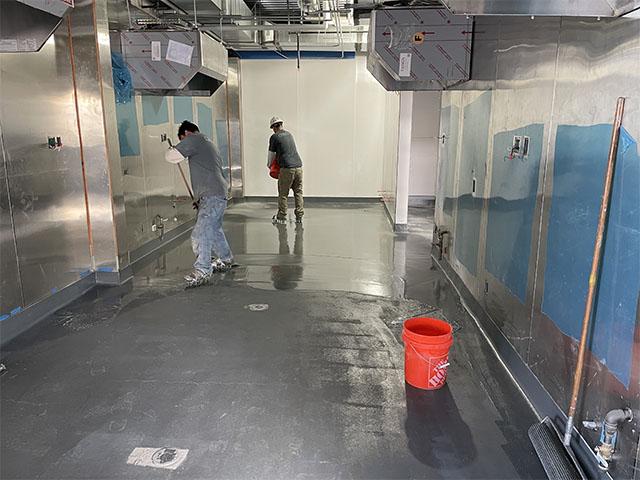
Additionally, because it goes down much thicker than standard coatings, it usually has to be hand-troweled by highly skilled applicators rather than simply rolled out. That added labor and material volume increases the initial installation invoice, even if it saves you thousands of dollars over the next twenty years.
The Classic Standard: Industrial Epoxy Flooring
Epoxy is the household name everyone knows, and for good reason. It’s a two-part resin system that undergoes a strict chemical reaction to cure into a rigid, plastic-like shell over your floor.
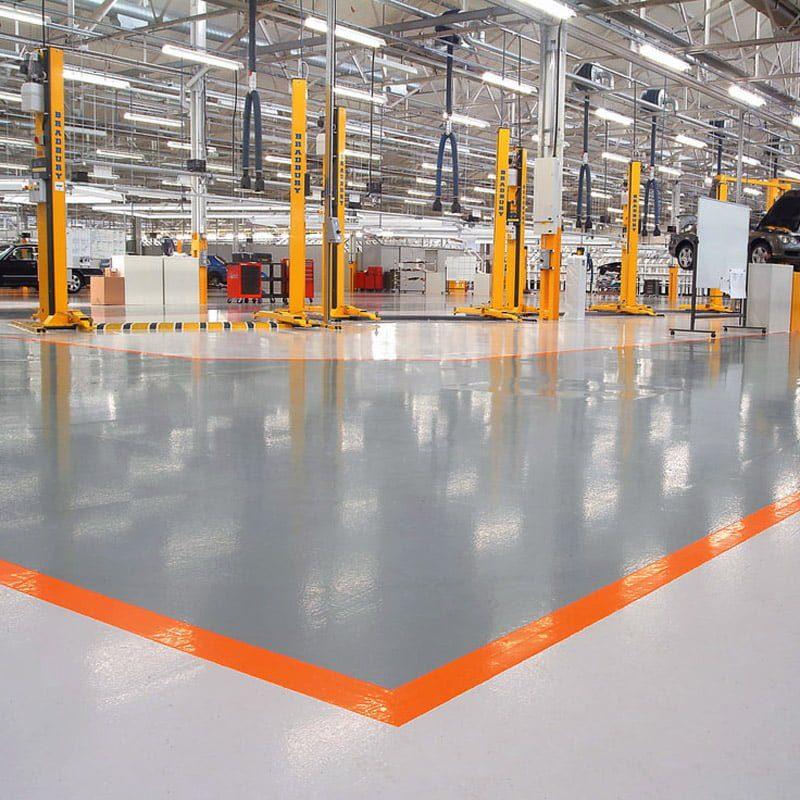
What it does best (The Pros): Aesthetics matter, and epoxy delivers that clean, high-gloss, professional look that instantly brightens up a gloomy warehouse or production floor. You can get incredibly creative with custom safety line striping, metallic pigments, or colored vinyl flakes to match your brand.
Beyond looking great, fully cured epoxy is astonishingly hard. If you have non-stop forklift traffic, heavy loaded pallets dragging across the floor, or mechanics dropping heavy steel tools, a thick epoxy system handles that heavy point-load impact beautifully without denting. It also shines when it comes to harsh inorganic chemicals, easily shrugging off spills of strong alkalis, sulfuric acid, and petroleum-based solvents.
The drawbacks (The Cons): Epoxy is notoriously rigid. Because it doesn’t flex, sudden and drastic temperature changes will cause it to shatter. It also absolutely despises moisture during the application phase. If your concrete slab has a high moisture vapor transmission rate and you slap an epoxy coating over it, you are going to see ugly, fluid-filled blisters pushing up through the floor in a matter of months.
Head-to-Head: Where Do They Belong?
Choosing between the two really just comes down to taking a hard, honest look at the abuse that happens inside your building every single day.
Go with Cementitious Urethane if: You manage a space that sees extreme temperature swings, constant wet processing, or heavy exposure to food byproducts. We are talking about commercial slaughterhouses, craft breweries, dairy processing plants, commercial kitchens, and deep-freeze cold storage warehouses. In these wet, harsh environments, urethane is the only safe bet.
Go with Industrial Epoxy if: Your facility is generally dry, climate-controlled, and you need a tough surface that looks highly professional. Think aviation hangars, automotive assembly lines, pharmaceutical cleanrooms, massive dry-goods warehouses, and heavy manufacturing machine shops.
The Best of Both Worlds: The Hybrid System

Here is a trick of the trade that commercial flooring contractors often use to get the best of both materials. Sometimes, you don’t have to choose just one.
Imagine a specialized manufacturing facility that requires frequent wet cleanings but also hosts high-profile investors who expect the production floor to look absolutely pristine. Contractors will lay down a thick base layer of cementitious urethane to act as the bulletproof, moisture-mitigating foundation. Then, once that cures, they topcoat the entire system with a specialized, high-gloss epoxy or polyaspartic resin.
The end result? You get the internal thermal and structural strength of a urethane floor, paired perfectly with the glossy, easy-to-clean showroom finish of an epoxy topcoat.
Making the Final Call
Guessing wrong on your flooring specification is a headache you simply do not want to deal with. Tearing up a failed coating to do the job a second time will always cost exponentially more than doing it right the first time around. Take the time to evaluate your slab’s moisture levels, your daily temperature swings, and your chemical exposure before ever writing a check.
Not sure whether epoxy or urethane cement is the right fit for your daily operations? Schedule a facility walkthrough with our industrial flooring specialists.