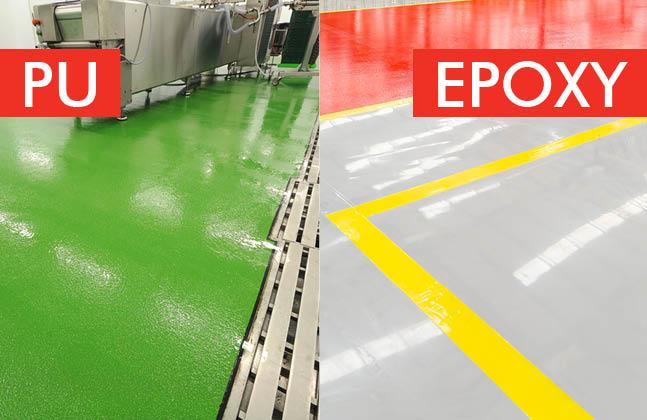
Picture this: You just signed off on a massive budget allocation to give your manufacturing plant a brand-new, polished resin floor. For the first few weeks, it looks incredible. It’s bright, clean, and highly professional.
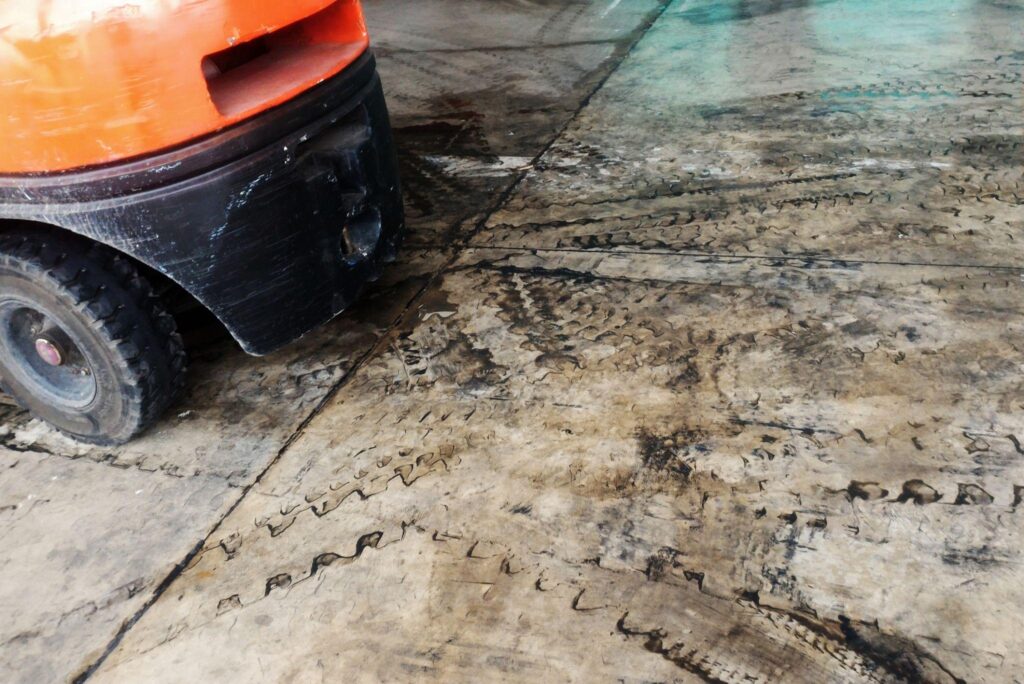
But six months down the line, reality sets in. The floor right next to your open loading dock bays has faded into an ugly, chalky yellow. Even worse, the high-traffic lanes where your forklifts constantly turn are covered in a web of tiny micro-scratches, making the entire surface look dull and permanently dirty.
What went wrong? It’s highly likely you picked the wrong chemistry for the job.
When facility managers look for industrial floor protection, they constantly run into the two biggest names in the business: epoxy and polyurethane (often just called PU). Because both are fluid-applied resins that cure into tough surfaces, people tend to treat them like they are completely interchangeable.
That assumption is a very fast way to ruin a costly floor. Epoxy and polyurethane have entirely different molecular structures, meaning they handle physical abuse in completely different ways. If you want a floor that survives heavy industrial traffic without looking like a war zone within a year, you need to understand where each material wins and loses.
Industrial Epoxy: The Structural Slab Builder
Think of industrial epoxy as the thick foundation layer of your flooring system. It is the absolute heavy-lifter of the resinous world.
Epoxy is inherently thick, builds up beautifully on concrete, and cures to a ridiculous level of surface hardness. Because it has great body and self-leveling properties, it is the premier choice for resurfacing. If your bare concrete slab is old, pitted, slightly cracked, or generally beat up, a high-build epoxy fills those imperfections seamlessly, creating a perfectly smooth, level canvas.
The Wins:
Where epoxy really earns its keep is raw compressive strength. It handles heavy, static weight effortlessly. If you are anchoring a 10,000-pound machining tool to the floor, or if a mechanic drops a heavy steel component off a lift, epoxy takes that heavy blunt-force impact like a champion. It also stands up incredibly well to harsh inorganic chemicals, easily shrugging off spills of battery acids, sulfuric acids, and heavy alkaline cleaners.
The Losses:
Because epoxy cures into an incredibly hard, rigid plastic, it has almost zero flexibility. If your building shifts or experiences heavy vibrations, epoxy won’t flex—it will crack.
Furthermore, standard epoxies absolutely hate sunlight. If exposed to the UV rays shining through your warehouse windows or open loading bays, clear or light-colored epoxy will rapidly amber, turning that ugly shade of yellow. Finally, while it handles blunt impact well, its rigid surface is surprisingly prone to surface scratching.
Polyurethane (PU) Coatings: The Scratch-Resistant Armor
If epoxy is the foundation of the house, polyurethane is the armor plating you install on top of it.
Unlike epoxy, standard polyurethane coatings go down incredibly thin. You cannot use a PU coating to fix a cracked slab or level out damaged concrete. If you roll polyurethane directly over an ugly, pitted floor, you are just going to end up with a very shiny, ugly, pitted floor.
The Wins:
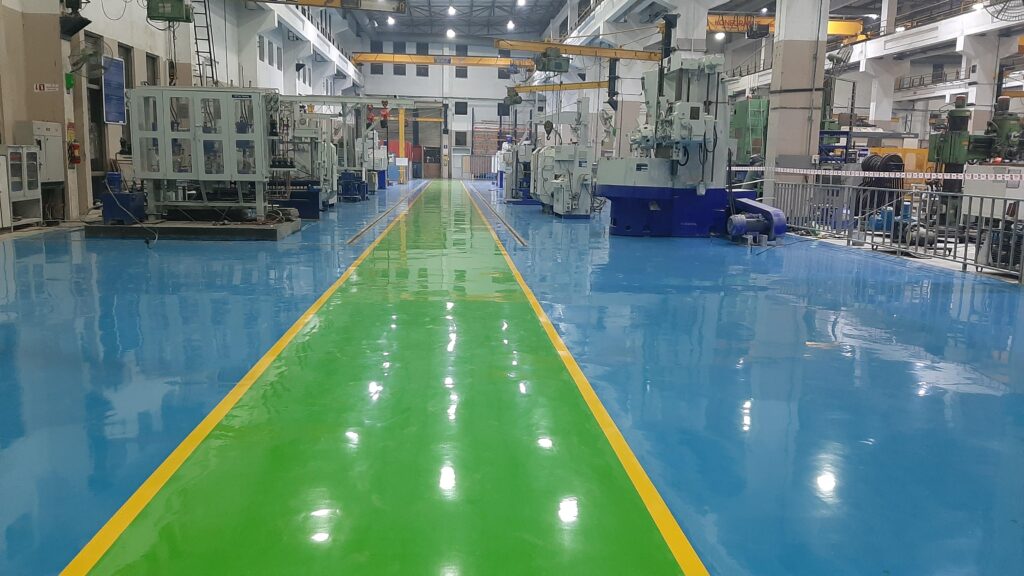
Polyurethane makes up for its lack of thickness with pure abrasion resistance. PU is highly elastic and incredibly resilient against friction.
Think about dragging a heavy wooden pallet with a protruding nail straight across your warehouse floor. That nail will deeply gouge a rigid epoxy floor. On a polyurethane floor, the flexible nature of the polymer allows it to absorb that friction and bounce back without scratching. In fact, high-performance aliphatic polyurethane topcoats offer nearly double the scratch and abrasion resistance of standard epoxies.
On top of that, aliphatic polyurethane is 100% UV stable. It will never yellow, chalk, or fade, no matter how many hours of direct sunlight it bakes in.
The Losses:
Because it is applied as a thin-mil film, it does not offer the same heavy structural impact resistance as epoxy. If you drop a heavy steel tool on a floor coated only with thin PU, the coating might technically hold together, but the concrete substrate beneath it can easily crater and fail.
The Quick Head-to-Head Comparison
To make your next facility planning meeting simpler, look at what kind of daily damage your floor actually faces:
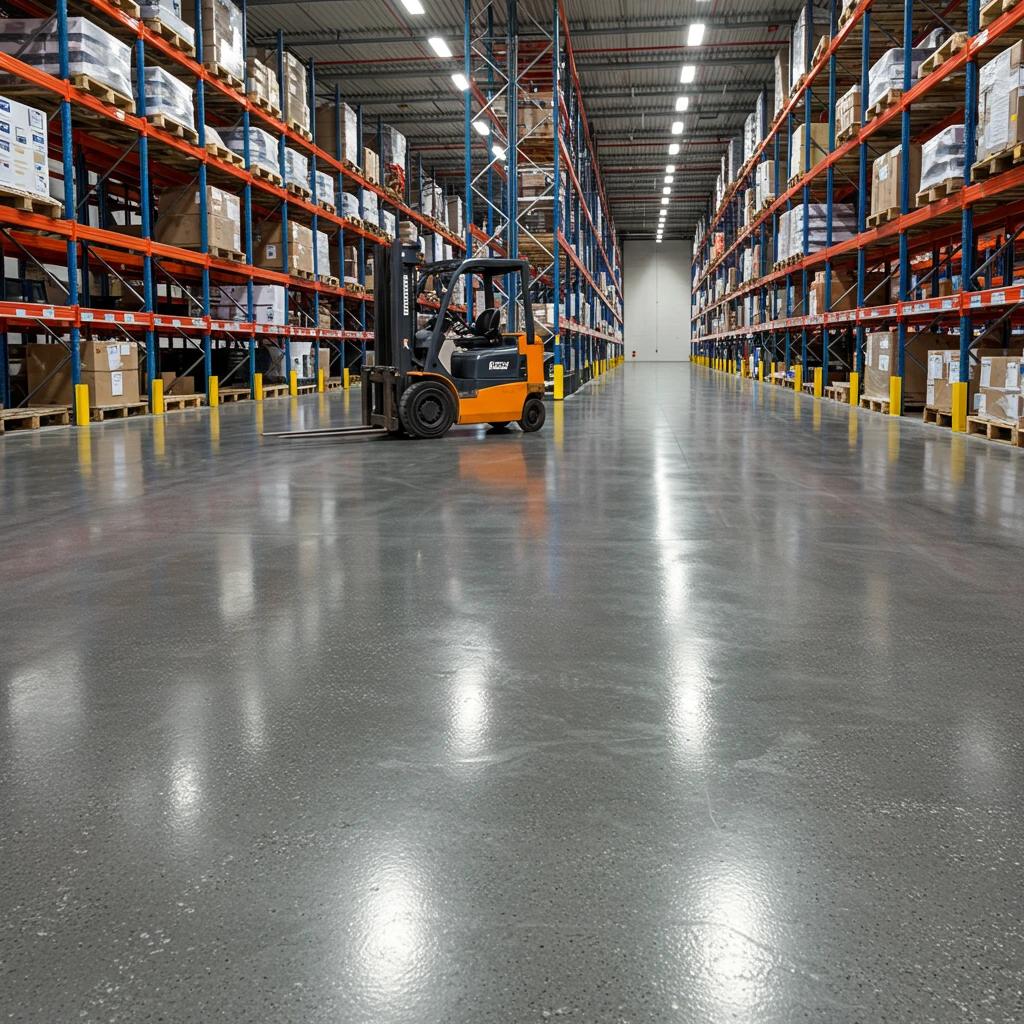
- Blunt Impact vs. Daily Abrasion: If your main headache is dropped tools and heavy machinery placement (impact), you need epoxy. If your main issue is non-stop forklift traffic, spinning tires, and dragging pallets (abrasion), you need polyurethane.
- Chemical Exposure: Epoxy easily handles heavy industrial acids and battery fluids. Polyurethane, however, is much better at resisting caustic solvents, lactic acids, and harsh staining chemicals like aviation hydraulic fluids.
- Flexibility: Epoxy is rigid and can snap under sudden stress. Polyurethane is slightly elastomeric, allowing it to move naturally with minor concrete movements.
The Best-Kept Secret: The Hybrid Coating System
Here is a strategy that professional industrial flooring contractors use to get the ultimate floor. You don’t actually have to choose between them.
The longest-lasting heavy-duty industrial floors on the planet don’t rely on a single chemical compound. Instead, they use a hybrid approach to get the best traits of both worlds.
First, the contractors apply a thick, high-build epoxy base coat directly to the shot-blasted concrete. This fills the deep cracks, builds up the thickness, and provides the heavy structural impact resistance. Then, right before the project is finished, they apply a clear, high-performance polyurethane topcoat directly over the cured epoxy.
The result is a bulletproof combination: you get the structural, bone-crushing strength of the epoxy base, completely shielded by the UV-stable, highly scratch-resistant armor of the polyurethane topcoat.
Conclusion
Choosing the right floor coating is all about matching the chemistry to your daily facility operations. Skipping the research and putting down the wrong product will always result in premature floor failure and expensive operational downtime.
Looking for maximum scratch resistance and UV stability for your warehouse? Contact us today to discuss hybrid epoxy and polyurethane systems.