Anyone who runs a commercial cold storage facility or refrigerated warehouse knows that temperature control is everything. You are constantly fighting the elements to keep your inventory perfectly chilled and your operations moving. But while most facility managers obsess over compressor maintenance, insulated doors, and racking systems, there is a massive structural vulnerability sitting right under their boots: the floor.
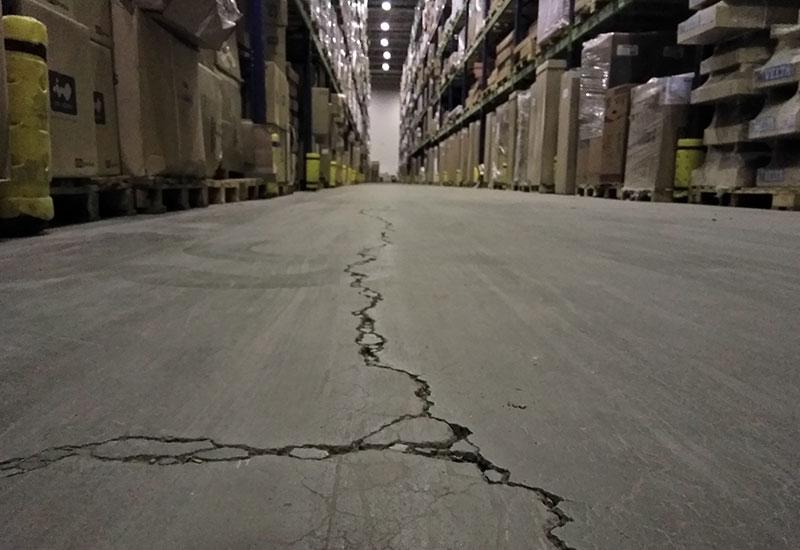
Standard concrete is naturally porous. It drinks up ambient moisture like a rigid sponge. When the temperature drops inside a blast freezer or a holding cooler, that trapped moisture freezes and expands. Fast forward a few seasons, and you are suddenly dealing with a spalling, cracked, and deteriorating surface. It damages expensive forklift tires, creates trip hazards, and worst of all, gives bacteria a place to hide.
You can’t just slap a standard coat of commercial floor paint on it and hope for the best. To maintain safety, pass strict hygiene audits, and keep your forklifts running smoothly, you need a specialized resinous flooring system built entirely around extreme temperature resistance.
Here is exactly what goes into choosing the right flooring for sub-zero environments, and why standard materials just don’t cut it.
The Unseen Enemy: Thermal Shock and Cycling
Before you look at the solution, you need to understand exactly why cold storage floors fail so frequently. It isn’t just the freezing temperatures doing the damage—it is the rapid shift in those temperatures.
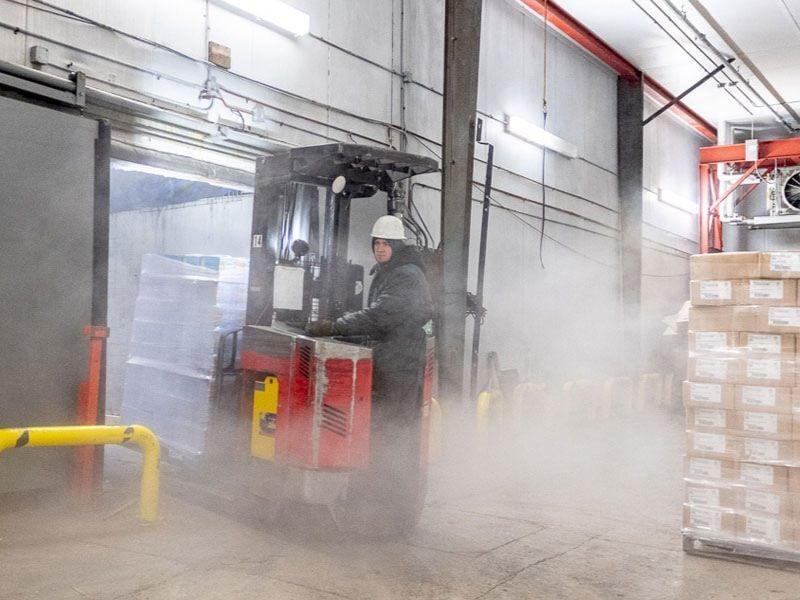
This is a phenomenon known as thermal shock. Imagine an employee driving a heavy forklift from a humid, ambient-temperature loading dock directly into a storage freezer sitting at $-10^\circ\text{F}$. The tires bring warmth and moisture, creating sudden micro-fluctuations on the surface of the floor.
Even more destructive are the mandatory cleaning protocols. If a frozen floor in a meat or poultry storage facility is suddenly washed down with $160^\circ\text{F}$ hot water or steam, the massive temperature swing forces the floor’s surface to expand violently. If your floor coating cannot handle that rapid expansion, it will simply snap. It loses its bond with the concrete slab and begins to blister and peel away in large chunks.
Epoxy vs. Polyurethane: Which Survives the Freeze?
When facility owners start looking for industrial floor coatings, “epoxy” is usually the first word that comes to mind. But when it comes to extreme cold, the chemistry gets a bit more specific.
The Case for Standard Epoxy
Traditional industrial epoxies are incredibly durable, boasting high compressive strength and fantastic chemical resistance. However, epoxy is inherently a rigid material. When exposed to freezing temperatures, it becomes even stiffer and more brittle. Standard epoxies also generally require a relatively warm room temperature to cure properly during installation.
- Where it works: Epoxy is a great fit for mildly chilled packaging halls, temperature-controlled corridors, and loading docks where the climate remains stable and consistently above freezing.
The Case for Cementitious Urethane (Polyurethane Concrete)
For actual blast freezers and deep-cold storage, cementitious urethane is the undisputed heavyweight champion. Unlike rigid epoxy, polyurethane systems are engineered to retain a critical degree of flexibility even when frozen solid.
More importantly, urethane cement has a thermal expansion coefficient that is almost identical to the concrete slab sitting underneath it. When that hot water washdown hits the frozen floor, the urethane coating expands and contracts right alongside the concrete. They move together as a single unit, which virtually eliminates the risk of thermal shock failure.
Solving the Downtime Dilemma
Let’s address the elephant in the room: installation downtime. The absolute biggest hesitation facility managers have when upgrading a cold storage floor is the sheer panic of shutting down the refrigeration units. Emptying out a commercial freezer and finding temporary storage for thousands of dollars of perishable inventory is a logistical nightmare most businesses simply cannot afford.
Modern flooring chemistry has completely bypassed this problem. Today’s specialized polyaspartic topcoats and winter-grade urethane cements are specifically formulated for rapid, low-temperature curing.
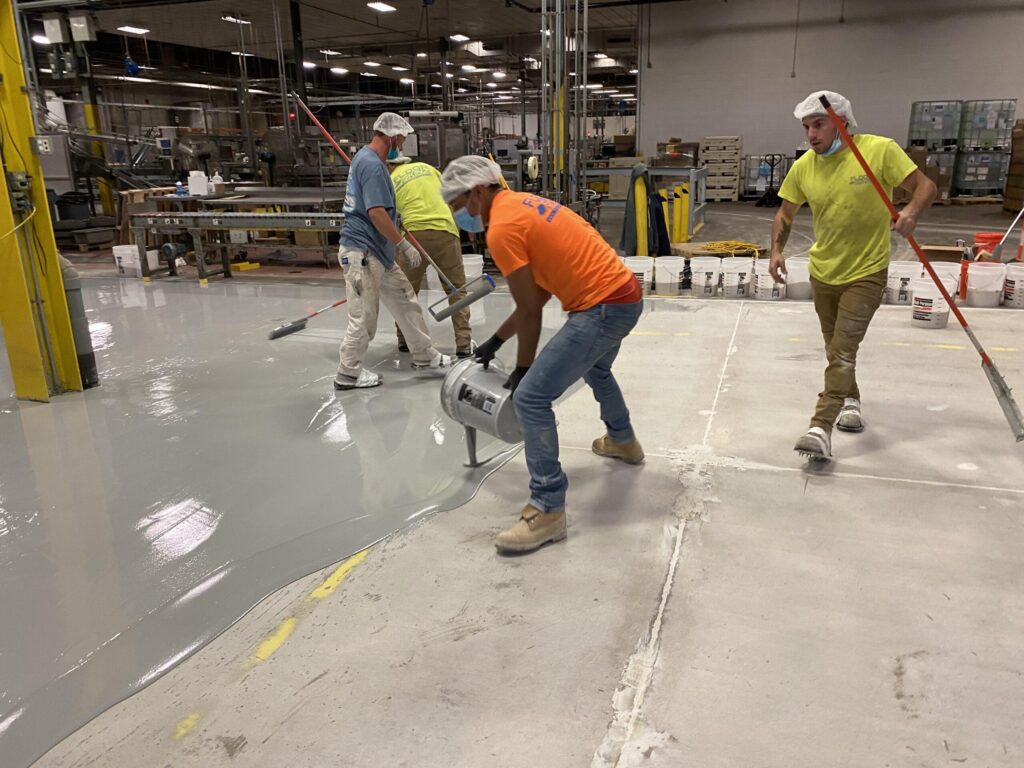
Experienced industrial flooring contractors can prep the damaged concrete and trowel down a multi-layer urethane system directly in sub-zero temperatures—without you ever having to turn the freezer off. These fast-curing systems can often be installed over a weekend, drying hard enough to handle full forklift traffic by Monday morning.
Traction and Safety in the Ice Box
Working in a cold storage facility carries a high risk of slips and falls. Condensation, frost, and occasional ice buildup create incredibly slick surfaces, particularly around high-traffic transition zones like freezer doors and loading bays.
When pouring a resinous floor, contractors have the ability to heavily customize the texture. By broadcasting rough aggregates—like silica quartz or aluminum oxide—directly into the wet coating before it cures, they create a deeply textured, slip-resistant finish. This aggressive texture cuts right through surface frost, giving rubber-soled boots and spinning forklift tires the grip they need to operate safely without slowing down production.
The Bottom Line
Running a commercial refrigeration facility is hard enough without constantly worrying about your concrete deteriorating beneath you. Trying to save money with standard paints or bare concrete will only lead to expensive patching, failed health inspections, and eventually, a total floor replacement.
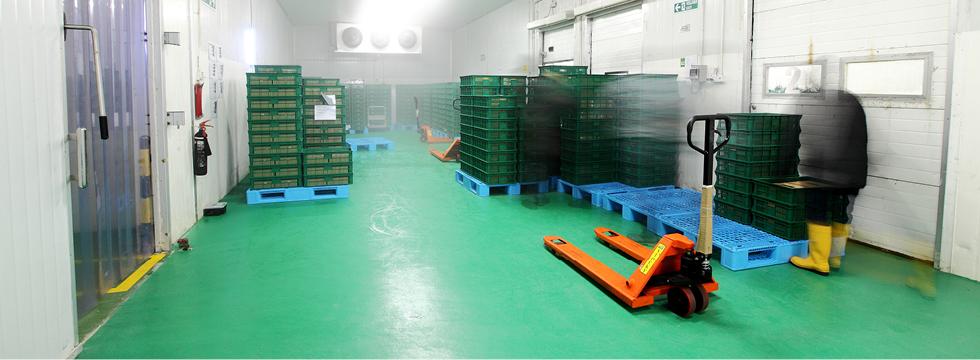
By investing in a thermal-shock-resistant, seamless urethane or specialized low-temp epoxy system, you are protecting your concrete slab for the long haul.
Ready to upgrade your refrigeration facility’s floors without shutting down your operations? Reach out to our low-temperature flooring experts today.