Introduction: The Alphabet Soup of Flooring Specs
Start researching ESD flooring, and you immediately hit a wall of technical jargon. ANSI. IEC. Ohms. Point-to-ground resistance. Charge generation.
For facility managers, it is completely overwhelming. You just want a floor that works. You want a floor that passes the audit. You don’t want to read a 100-page electrical engineering manual.
But getting this wrong is incredibly expensive.
Install the wrong floor, and you face failed compliance audits, damaged micro-electronics, and hidden safety hazards. If an auditor walks in and your floor tests outside the required parameters, your production line shuts down. It is that simple.
You don’t need to be an electrical engineer to buy the right floor. You just need to understand the absolute basics. Here is exactly what those specifications mean in plain English.
The Gold Standard: What is ANSI/ESD S20.20?
If you build electronics, manufacture aerospace components, assemble medical devices, or supply defense equipment, this is the standard that matters.
ANSI/ESD S20.20 is the global rulebook. To pass an audit, you must prove your facility safely manages static electricity. The ultimate goal? Prevent any electrical discharge greater than 100 volts from hitting a sensitive component. (For context, a human being cannot even feel a static shock until it hits about 3,000 volts).
Your flooring is the literal foundation of this compliance. If your floor fails the resistance test, your entire static control program fails the audit.

Making Sense of Ohms: Conductive vs. Dissipative
Electrical resistance is measured in “ohms.” Don’t let the math scare you. The ohm number simply tells you how fast the floor pushes static electricity into the ground.
Think of it like a water pipe. A low-ohm floor is a wide-open pipe. Electricity rushes through it instantly. A high-ohm floor is a narrower pipe. Electricity flows through it slowly and safely.
ESD floors fall into two main categories:
1. Conductive Flooring (10⁴ to 10⁶ ohms)
- Electricity moves very fast.
- Used for highly volatile materials, explosive chemical powders, or extreme micro-electronics fabrication.
- Removes static instantly before a spark can even form.
2. Static Dissipative Flooring (10⁶ to 10⁹ ohms)
- Electricity moves slower and in a controlled manner.
- Used for general electronics assembly, server rooms, and data centers.
- Prevents sudden shocks to workers while still protecting the gear.
How ESD Floors Are Actually Tested in the Real World
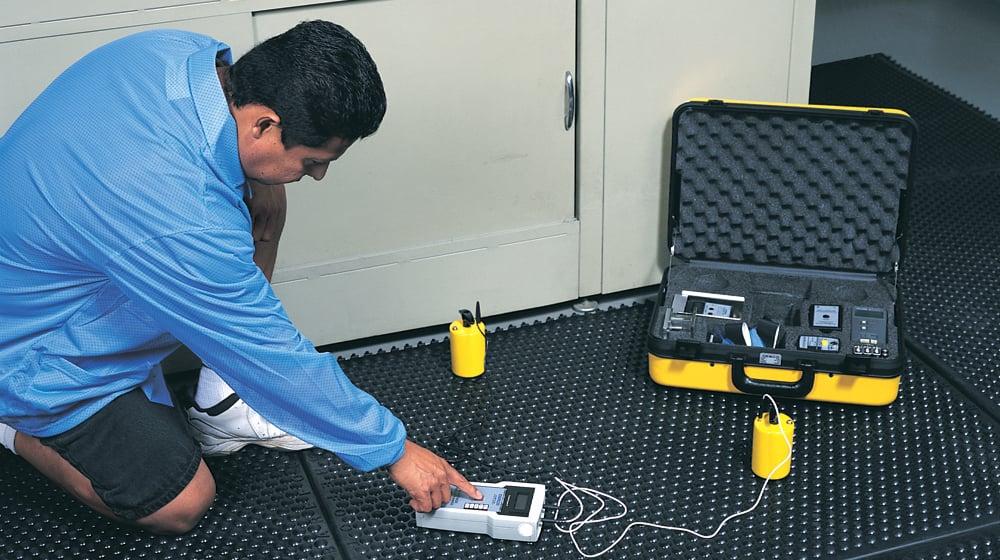
You cannot just install the floor, cross your fingers, and forget about it. Auditors run specific, rigorous tests using specialized megohmmeters.
Here’s what they’re after:
- Point-to-Ground (RTG): The auditor sets a 5-pound weighted electrode on the floor, then links the other end to the building’s earth ground. This step confirms that the electricity is, in fact, safely directed away from the room.
- Point-to-Point (Rtt): The auditor places two electrodes 36 inches apart on the floor. This measures the resistance between two random spots. It proves the floor works evenly everywhere. It guarantees you have no “dead spots” where static can get trapped.
The Humidity Factor Here is a secret many contractors won’t tell you: standard concrete changes resistance based on the weather. If it rains, the concrete absorbs moisture and becomes more conductive. In a dry winter, it becomes an insulator.
True engineered ESD flooring from Chemcoats is completely unaffected by ambient humidity. It delivers the exact same ohm reading in a July monsoon as it does in a dry December.
The Footwear Factor (The System Approach)
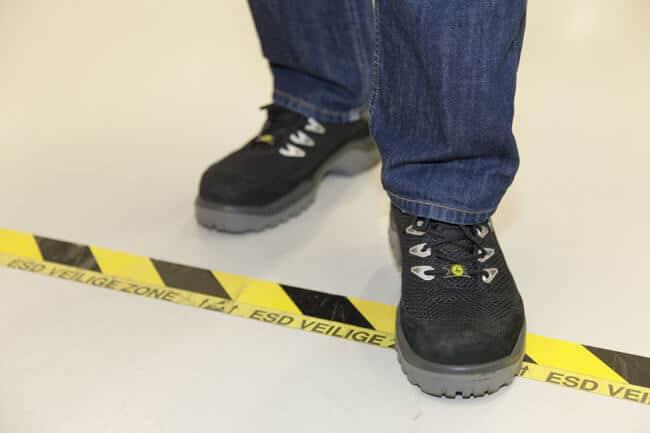
An ESD floor does not work alone. It is part of a system. If your workers wear thick rubber-soled construction boots, the static is blocked. The charge stays on their bodies. It cannot reach the floor.
To meet ANSI specifications, true ESD flooring must be paired with ESD-safe footwear or heel grounding straps. The standard measures the “Person/Footwear/Flooring System.” If one link breaks, the system fails.
Final Thoughts
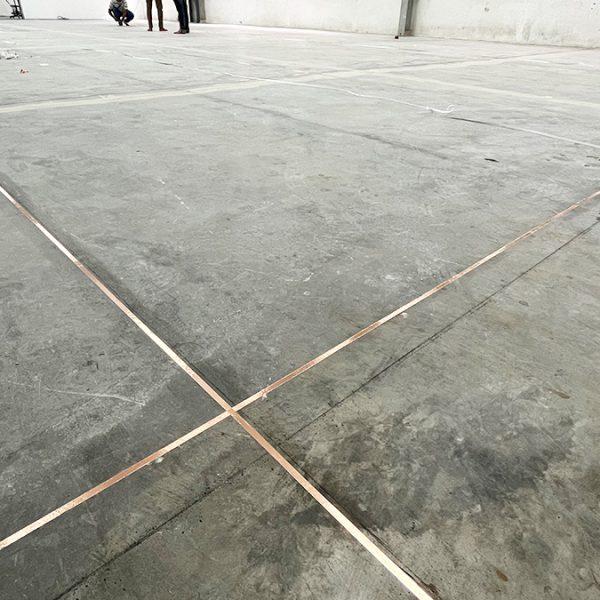
ESD specifications are not designed to confuse you. They exist to protect your bottom line. Know your industry’s required resistance range. Ensure the copper grounding grid is verified. Partner with industrial flooring experts who guarantee compliance and provide the documentation to back it up. Let Chemcoats handle the science, so you can focus on production.