Introduction
Take a walk through any large-scale commercial building, hospital, or manufacturing plant. Everyone pays attention to the polished lobbies, the clean production lines, and the high-tech server rooms. But completely hidden away—usually in the darkest basement or up on the roof—is the actual beating heart of the entire facility: the mechanical room.
These spaces house the massive HVAC units, water heaters, boiler systems, elevator motors, and chiller pumps that keep the building alive. They are also incredibly abusive environments for a concrete slab. Choosing the right mechanical room flooring is essential, as these zones represent some of the most abusive environments for a concrete slab.
For decades, architects and facility managers treated mechanical rooms as an afterthought, often leaving the concrete floors completely bare. Today, that oversight is recognized as a massive liability. Between heavy machine vibrations, caustic chemical leaks, and the ever-present threat of a burst pipe, an unprotected mechanical room floor is a disaster waiting to happen.
If you are planning a facility upgrade, here is exactly why specialized resinous flooring—specifically industrial epoxy floors for mechanical rooms and urethane systems—is the only logical choice to protect your mechanical spaces.
1. The Ultimate Waterproof Containment
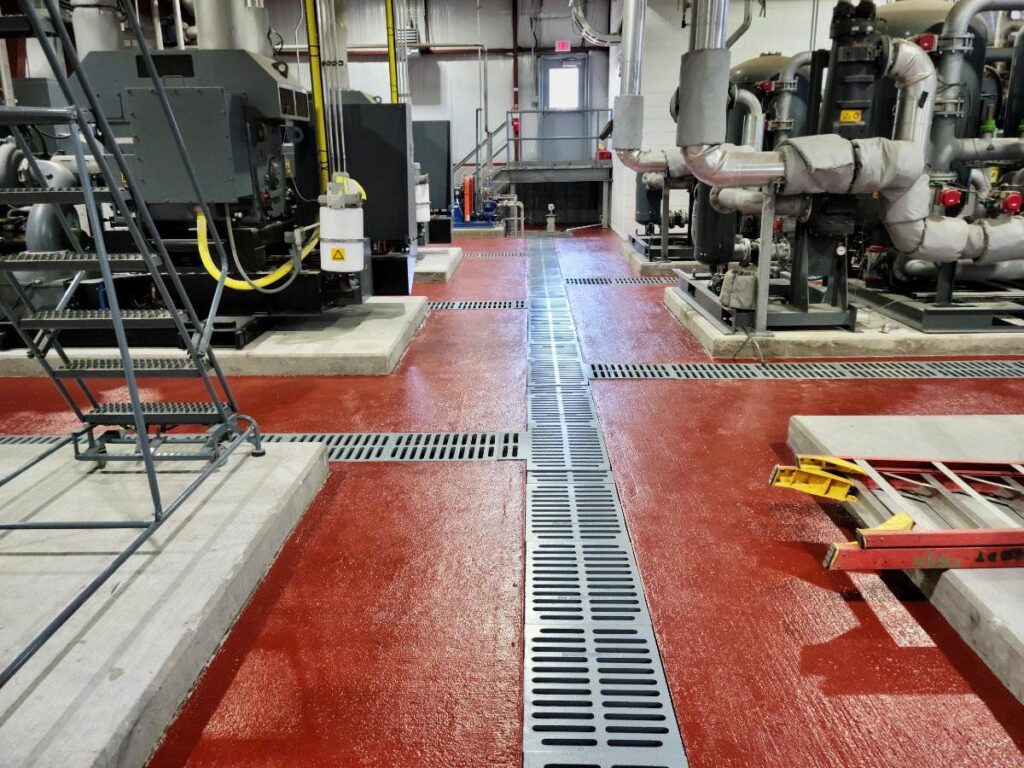
Let’s talk about the single biggest nightmare for a facility manager: a massive water leak in a mechanical room located on an upper floor.
If a commercial chiller or boiler line bursts in a penthouse mechanical room, thousands of gallons of water will hit the floor. Bare concrete is porous. Water will immediately seep right through the slab, travel down the walls, and destroy the offices, electrical panels, and expensive equipment sitting on the floors below it.
The Solution: Specifying high-performance Industrial Waterproofing creates a seamless, impenetrable barrier that essentially turns your room into a waterproof bathtub. An industrial epoxy flooring system essentially turns your mechanical room into a massive, waterproof bathtub. When installed correctly, the resin flows into every microscopic pore of the concrete, curing into an impenetrable barrier.
To make it completely foolproof, professional installers will use a technique called “coving.” Instead of stopping the floor coating where it meets the drywall, they trowel the epoxy a few inches up the surrounding walls, creating a seamless, curved baseboard. If a pipe bursts, the water stays entirely contained within the room, safely directing itself toward the floor drains rather than leaking through the ceiling of the room below.
2. Chemical and Lubricant Resistance
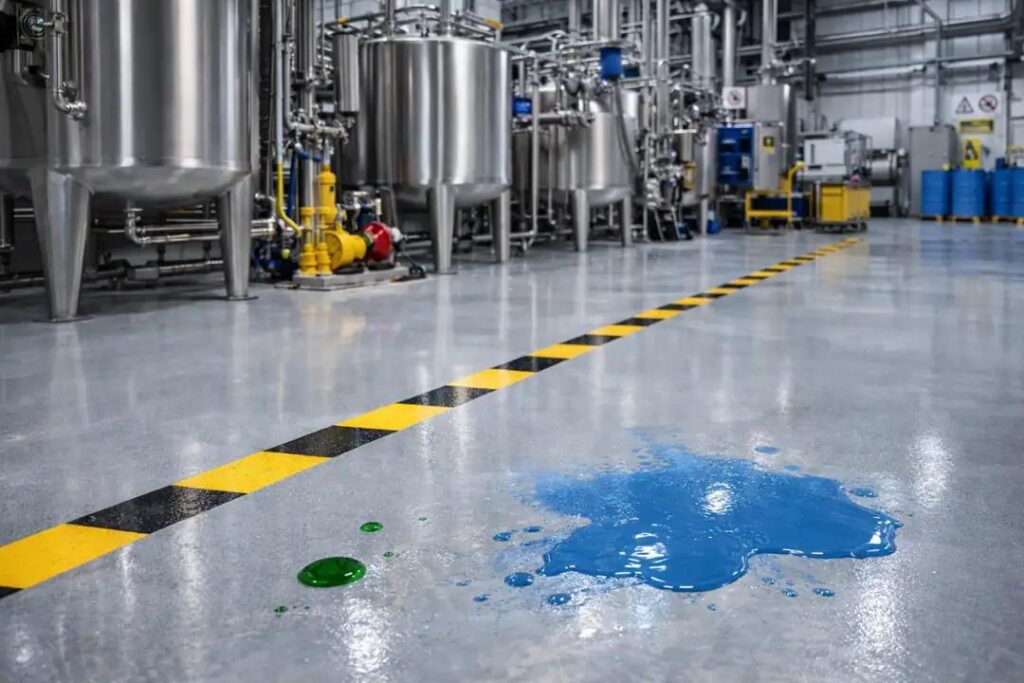
Mechanical equipment requires a lot of heavy fluids to stay operational. Chillers run on glycol. Elevator motors and massive hydraulic pumps rely on heavy oils and greases. Boilers utilize harsh water-treatment chemicals to prevent scaling, making a specialized Boiler Room Floor Coating an absolute necessity.
When these fluids inevitably drip or leak onto bare concrete, they don’t just sit on the surface. They soak deep into the slab. Over time, petroleum-based lubricants and harsh chemical treatments will actually break down the chemical bonds of the concrete, causing it to crumble and spall. Furthermore, once concrete is deeply saturated with oil, it is incredibly difficult to ever get a new coating to stick to it in the future.
The Solution: A high-build epoxy floor provides phenomenal chemical resistance. It is completely non-porous. If a pump blows a seal and dumps hydraulic fluid all over the floor, the oil simply pools on the surface. It can sit there for days without ever penetrating the slab, allowing your maintenance team to simply wipe it up with a rag and a mild degreaser.
3. Absorbing Heavy Machinery Vibrations
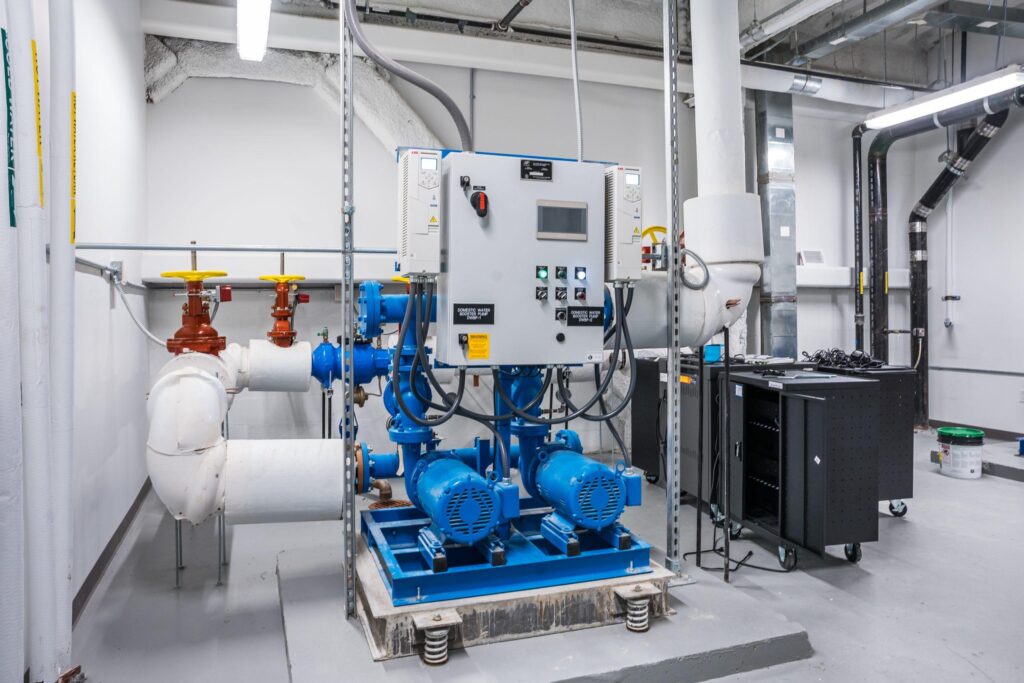
Mechanical rooms are loud, and the equipment inside them is constantly moving. Massive industrial pumps and heavy air handling units generate constant, , low-frequency vibrations across mechanical equipment room floors.
Over the years, those micro-vibrations transfer directly from the metal equipment mounts down into the concrete slab. This constant physical stress leads to structural micro-cracking across the floor. If the concrete cracks, your waterproofing is instantly compromised.
The Solution: While standard epoxy is fantastic, many mechanical rooms utilize a specialized “flexible” epoxy or an elastomeric polyurethane membrane as a base coat. These elastomeric layers have a rubber-like quality to them. They act as a heavy-duty shock absorber between the vibrating machinery and the rigid concrete slab. This flexibility ensures that even if the building shifts slightly or the pumps vibrate heavily, the floor coating will stretch rather than snap.
4. Improving Maintenance Visibility and Safety
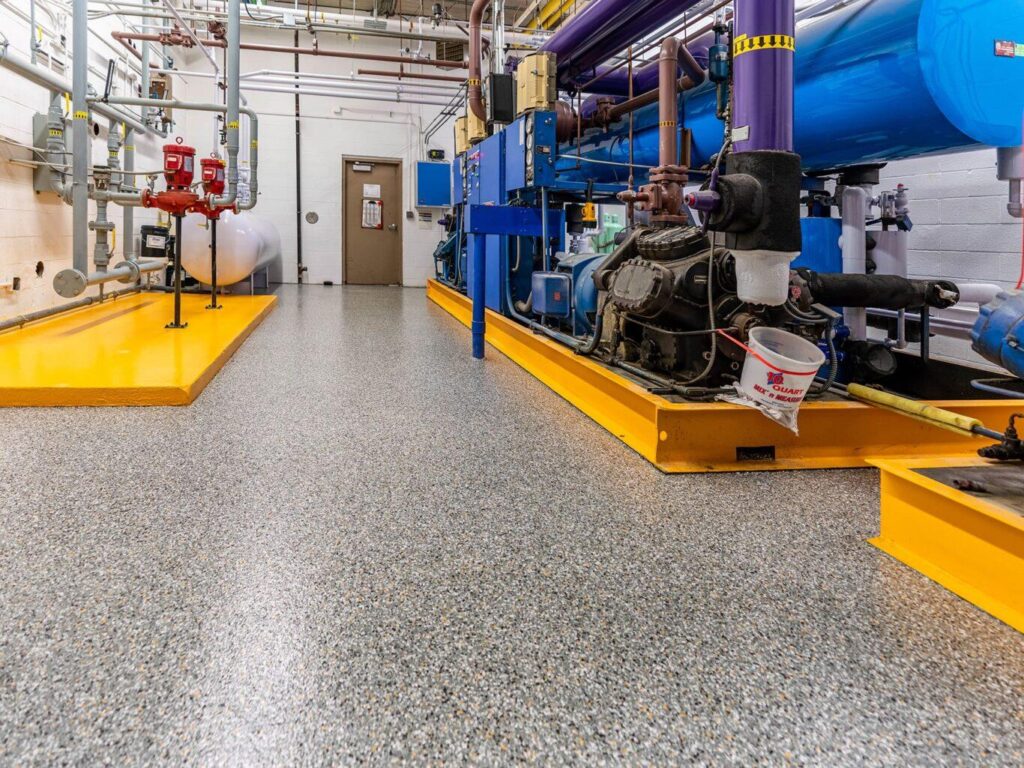
Mechanical rooms are notoriously dark and poorly lit. When HVAC room flooring consists of just a dingy, stained gray concrete slab, it is incredibly difficult for a maintenance technician to spot a slow leak. A slow drip of green glycol or dark hydraulic oil just blends into the shadows.
The Solution: Upgrading to a resinous floor coating completely changes the visibility of the room. By choosing a bright, highly reflective color—like a light gray or even safety yellow for specific pump pads—any fluid leak becomes instantly visible. Your maintenance crew will spot a dripping pipe immediately during a routine walkthrough, allowing them to fix a minor issue long before it becomes a catastrophic equipment failure.
Additionally, because mechanical rooms are prone to moisture, these floors can be highly customized with anti-slip aggregates. Broadcasting quartz or aluminum oxide into the epoxy ensures your technicians have aggressive traction under their boots, even when the floor is covered in water or spilled oil.
Conclusion
A mechanical room might be out of sight, but it should never be out of mind. Leaving your concrete unprotected in an environment prone to heavy vibrations, chemical spills, and water leaks is a massive financial risk to the rest of your building. A seamless, waterproof epoxy floor is an insurance policy that protects your infrastructure for decades.
Want to ensure your building’s infrastructure is fully waterproofed and protected? Contact Chemcoats today to reach out to our technical team to discuss specialized epoxy systems for your mechanical rooms.