How to Select the Proper Floor Coating for Forklift Battery Charging Areas
Walk into any large-scale distribution center, manufacturing plant, or busy warehouse, and you will immediately notice the constant hum of forklifts. They are the undeniable workhorses of modern industry. But to keep those heavy machines moving shift after shift, they require a dedicated space to power up.
Take a close look at the concrete floor directly beneath your facility’s forklift battery charging station. If it hasn’t been properly protected, it probably looks like a war zone.
Battery charging areas are arguably the single most abused piece of real estate in any industrial facility. They take a relentless beating from two completely different angles: extreme physical impact and highly corrosive chemical attacks. Throwing down a standard coat of commercial floor paint in this zone is basically throwing your maintenance budget directly in the trash.
If you are setting up a new charging station or trying to repair a deteriorating slab, you have to use specialized chemistry. Let’s break down exactly what happens in these designated power zones and the specific resinous flooring required to survive them.
The Silent Concrete Killer: Sulfuric Acid
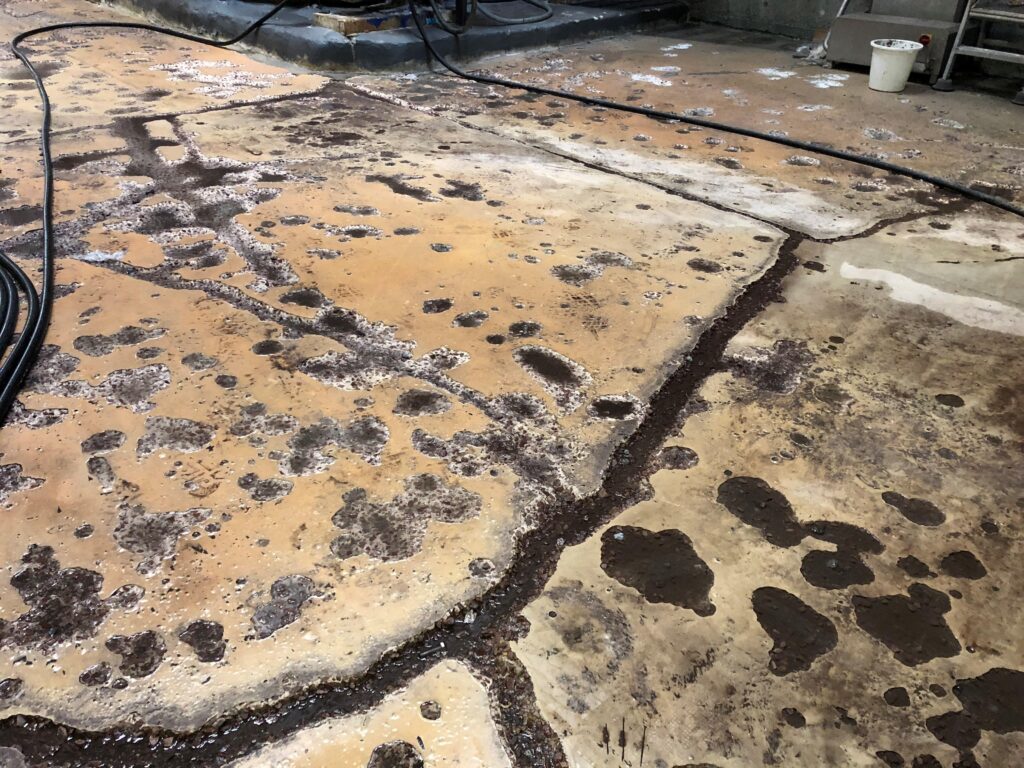
The biggest threat to your charging room floor isn’t the heavy machinery itself; it is what leaks out of the machinery.
Industrial forklift batteries are massive, and they rely on a volatile mixture of water and heavy sulfuric acid to hold a charge. When these batteries are plugged in and actively charging, the internal liquid heats up and expands. If a battery has been slightly overfilled with water by a maintenance worker, that boiling, highly concentrated acid will bubble over the top, run down the side of the casing, and drip directly onto the floor.
Bare concrete is naturally highly alkaline. When concentrated sulfuric acid hits an alkaline concrete slab, a violent chemical reaction occurs. The acid literally eats the calcium bonds holding the concrete together. Within a matter of months, a smooth concrete floor will be reduced to a pitted, crumbling, dusty mess that looks like a gravel road.
Why Standard Epoxy Just Isn’t Enough
When facility managers realize their concrete is being eaten alive, their first instinct is usually to call a contractor and ask for a standard industrial epoxy floor.
Here is the hard truth: standard epoxy will fail in a battery room.
While everyday Industrial Epoxy Flooring are fantastic at resisting oil, grease, and mild chemical spills, they are not formulated to handle sustained exposure to highly concentrated battery acid. If a puddle of 30% to 40% sulfuric acid sits on a standard epoxy floor over a long weekend, it will burn right through the coating. By Monday morning, the epoxy will be bubbling, blistering, and peeling away from the slab.
The Hero of the Battery Room: Novolac Epoxy
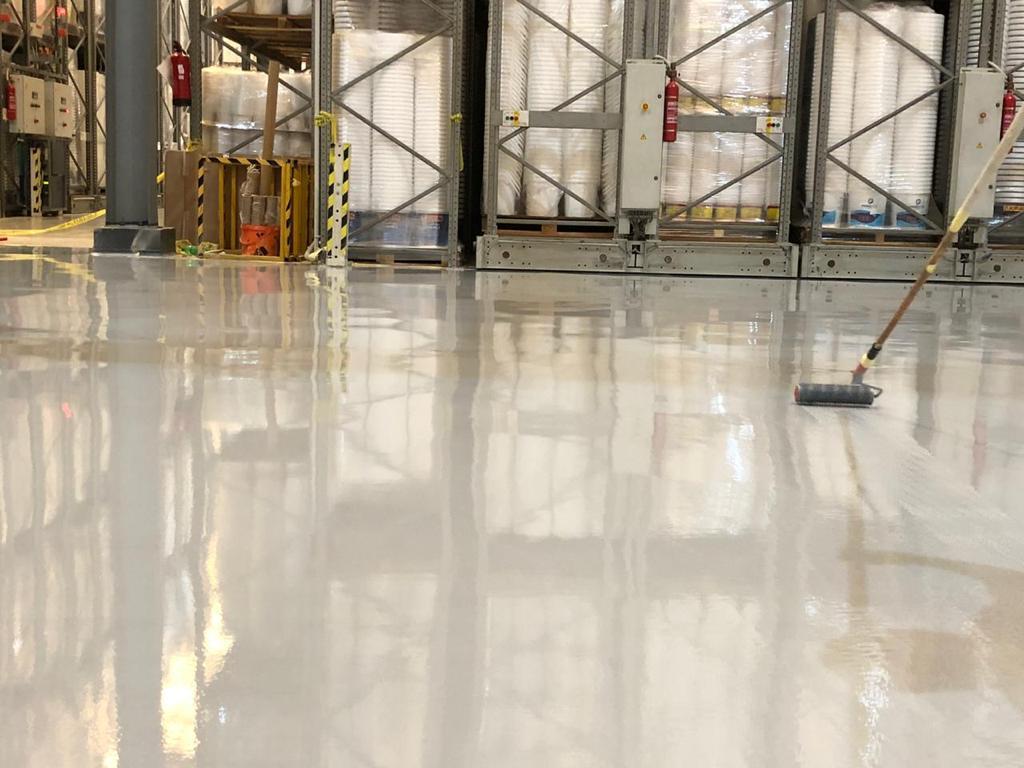
To properly protect this zone, you need a very specific upgrade in resin chemistry known as Novolac epoxy.
Think of Novolac as traditional epoxy on steroids. During the manufacturing process, Novolac resins are engineered with a significantly higher cross-linked molecular density. In plain English, the chemical bonds are woven together much tighter than standard coatings.
When battery acid drips onto a Novolac epoxy flooring, the molecules in the acid are literally too large to penetrate the tightly woven molecular surface of the coating. The acid just sits harmlessly on top of the floor, giving your maintenance crew plenty of time to neutralize the spill with baking soda and safely wash it down the drain. If you operate a commercial battery charging room, a Novolac epoxy topcoat is an absolute, non-negotiable requirement.
Surviving the Drop: Extreme Point Loading
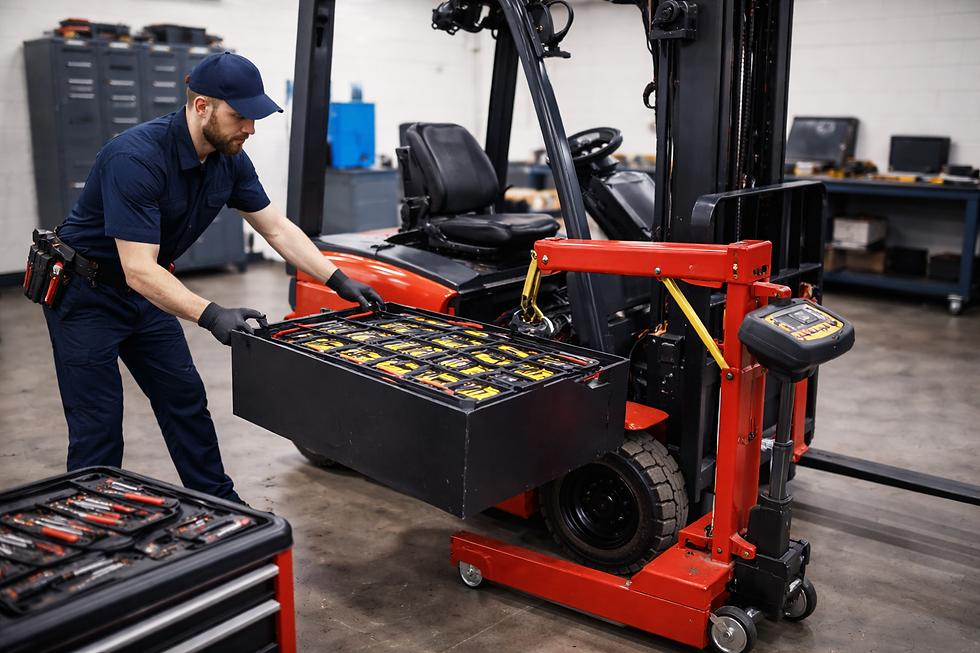
Chemical resistance is only half the battle. We also have to account for sheer physical trauma.
Industrial forklift batteries are shockingly heavy, often weighing anywhere from 1,500 to 3,000 pounds each. When a forklift pulls up to the station, technicians use heavy overhead hoists or specialized pallet jacks to pull the dead battery out and drop a fresh one in.
Inevitably, a heavy battery will get dropped slightly too hard. Or, a steel chain from the hoist will drag across the floor. If you install a thin, paint-like coating, that physical impact will shatter the resin and expose the bare concrete underneath. Once the concrete is exposed, the acid will find it.
To prevent this, contractors will typically install a thick, heavy-duty epoxy mortar or PU Concrete / PU Flooring cementitious urethane basecoat to act as a shock absorber. This builds up the floor’s compressive strength, allowing it to take massive heavy impacts without cracking. The acid-resistant Novolac coating is then applied on top of this heavy-duty foundation.
Safety Striping and Slip Resistance
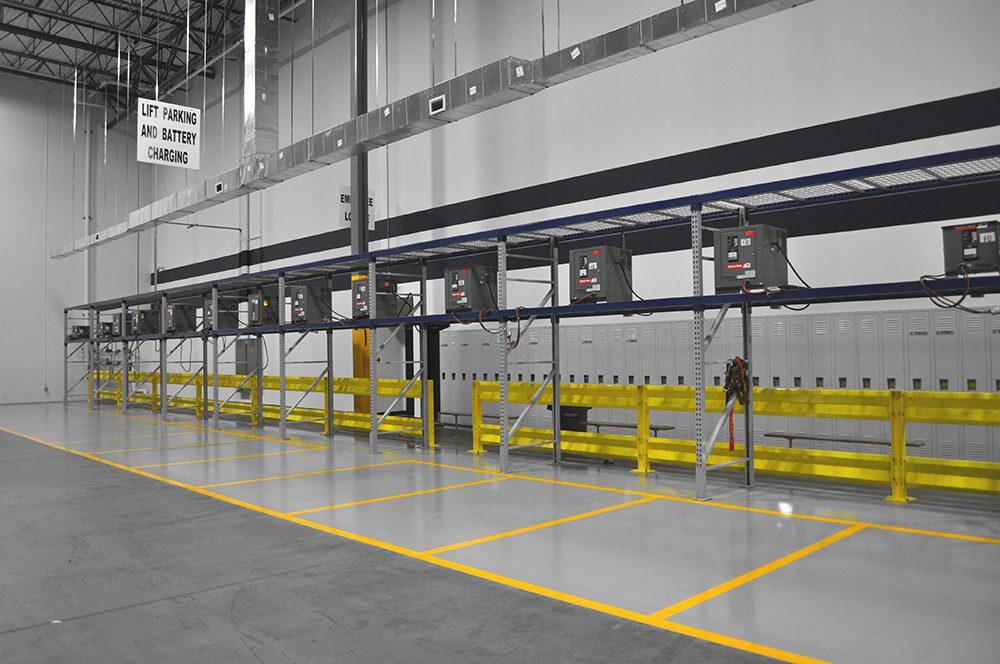
Finally, a proper battery charging area needs to be highly visible and incredibly safe for pedestrian traffic. OSHA heavily regulates these zones.
Because battery rooms involve handling hazardous liquids, the floors get wet frequently. When acid mixes with neutralizing powders and water, the floor turns into an ice rink. A professional installer will broadcast heavy grit—like aluminum oxide—into the final coat of Novolac epoxy to create a deeply textured, anti-slip surface that grabs onto rubber boots.
Additionally, bright safety yellow epoxy line striping should be embedded directly into the floor. This permanently designates the hazardous charging zone, maps out safe pedestrian walkways, and clearly marks the location of emergency eyewash stations.
The Bottom Line
A forklift battery room is no place to cut corners. Ignoring the unique chemical and physical abuse happening in this zone will lead to ruined concrete, expensive downtime, and serious safety violations. By investing in a thick, high-build basecoat topped with a chemical-blocking Novolac epoxy, you guarantee your floor will survive the toughest conditions your warehouse can throw at it.
Stop letting sulfuric acid eat your concrete. Contact Chemcoats to get a quote on an acid-blocking Novolac epoxy system for your charging station today.