Introduction: The Most Ignored Asset in Your Facility
Think about how you manage your facility. You service the HVAC system. You perform preventative maintenance on the forklifts. You inspect the roof for leaks.
But what about the floor?
In the hierarchy of industrial facility management, flooring is almost always the most ignored asset. Unless there is a massive pothole completely stopping a forklift, or a tripping hazard that just caused a workers’ compensation claim, most business owners simply do not think about their bare concrete floors.
The prevailing mentality is: “If it’s not totally broken, don’t fix it.”
But ignoring an aging, unprotected concrete floor is an incredibly expensive mistake. Bad flooring is a hidden leak in your Profit & Loss statement. It quietly drains profitability from manufacturing plants, warehouses, and logistics centers every single day.
If you think upgrading to a professional industrial resin floor from Chemcoats is too expensive, it is time to look at what your current damaged floor is actually costing you right this second.
The Hidden Tax of “Concrete Dusting”
There is a massive misconception that poured concrete is a permanent, indestructible surface. It isn’t.
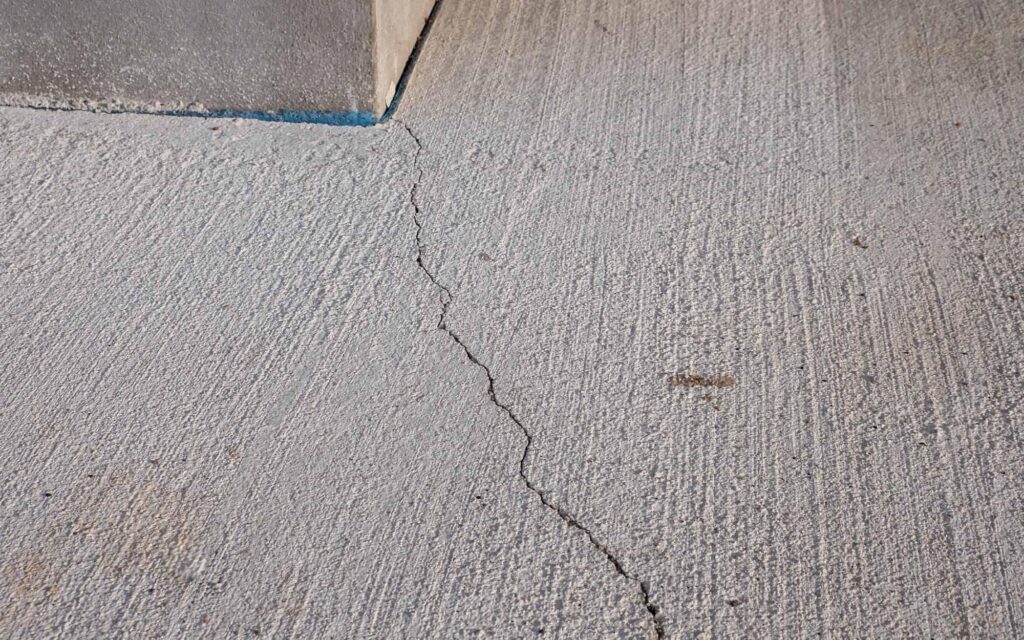
As forklifts, pallet jacks, and heavy steel-toed foot traffic grind against the raw floor, the top layer of concrete slowly breaks down. This friction releases a continuous, invisible cloud of fine, highly abrasive silica dust into the air. The industry calls this “concrete dusting.”
This dust does not just disappear. It costs you money in three specific ways:
- Ruined Inventory: This dust settles on finished products, raw materials, and clean packaging. Your clients receive dusty, dirty pallets and reject the shipments. You lose the sale, damage your brand, and pay for the reverse logistics.
- Catastrophic Equipment Failure: Concrete dust acts exactly like airborne sandpaper. It gets sucked into the cooling vents of your office computers, manufacturing machinery, robotics, and HVAC systems. It coats the motherboards. Motors overheat. Sensors fail. You end up paying for premature mechanical replacements and dealing with unplanned production downtime.
- Severe Health Hazards: Breathing in ambient silica dust is a severe respiratory hazard for your workforce. It leads to decreased worker morale, increased sick days, and massive potential OSHA or health board safety violations.
The Destruction of Your Forklift Fleet
Go out to your warehouse floor right now and look at the polyurethane wheels on your forklifts.
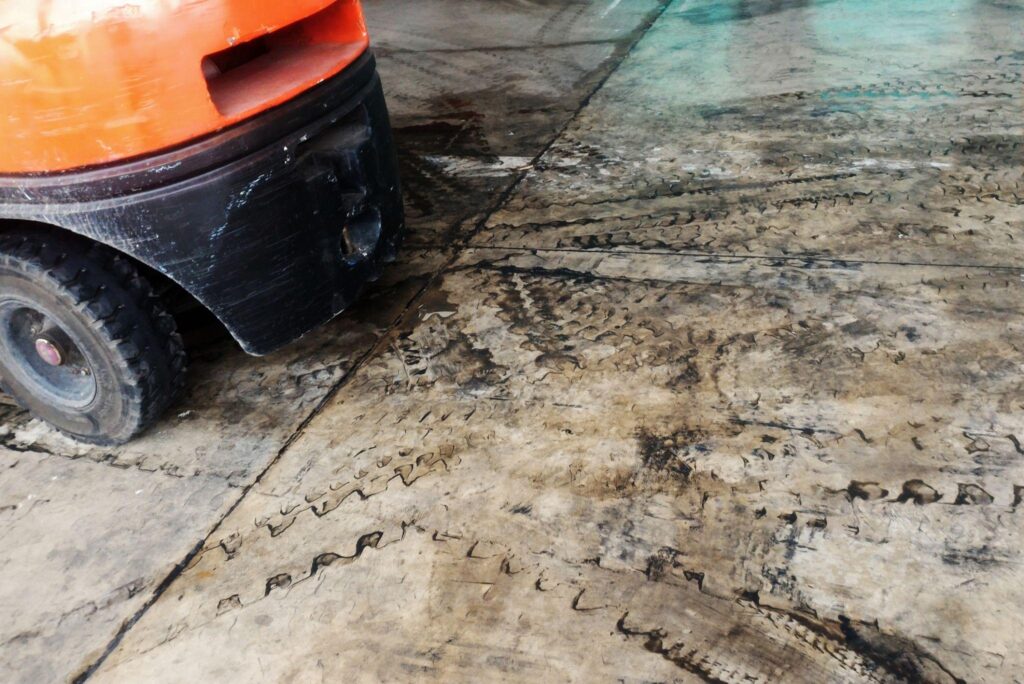
If your floor has cracks, spalling, divots, and exposed aggregate, those wheels are taking a violent beating. Every single time a heavy forklift hits a pothole in the concrete, the impact chips the tires. It violently knocks the suspension out of alignment. The heavy vibration risks damaging the fragile electronics and sensors inside modern material handling equipment. Furthermore, the constant jarring causes severe ergonomic stress and chronic back pain for your forklift operators.
Forklift repairs aren’t exactly a bargain. The expenses associated with repeatedly replacing worn-out wheels, fixing suspensions, and coping with lost productivity due to equipment breakdowns can easily surpass the investment in a Chemcoats resin floor.
Slower Production and Lower Efficiency
Time is, after all, money. When a floor is compromised, it inevitably slows down your equipment operators.
Forklift operators must constantly adjust their driving to compensate for less-than-ideal surfaces. They slow down, maneuvering around potholes, cracks, and uneven seams, all to prevent the cargo from shifting or the vehicle from rolling. In a busy distribution center or a factory floor where time is money, a mere five seconds lost per trip because of poor flooring can be a significant setback.
Multiply those five seconds by fifty trips a day, across ten different drivers, over an entire year. You are losing thousands of operational hours.
A seamless, perfectly level resin floor allows your equipment to move rapidly at maximum safe speeds. You instantly improve your operational flow and output.
The Threat to Automated Guided Vehicles (AGVs)
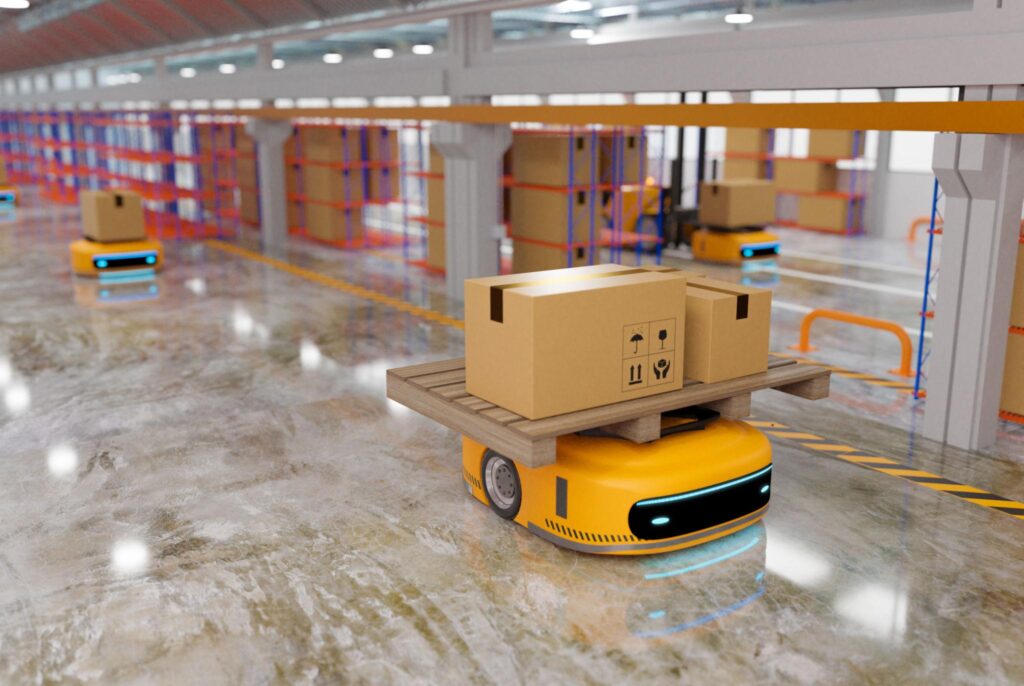
If you are upgrading your facility with modern robotics and AGVs, your floor is suddenly your most critical asset.
AGVs require perfectly flat, highly reflective, and completely seamless surfaces to operate. A simple crack or an uneven expansion joint in the floor will trip their laser collision sensors and shut them down in the middle of an aisle. If your floor is bad, your million-dollar robotics investment is completely useless.
Audit Failures and Legal Liabilities
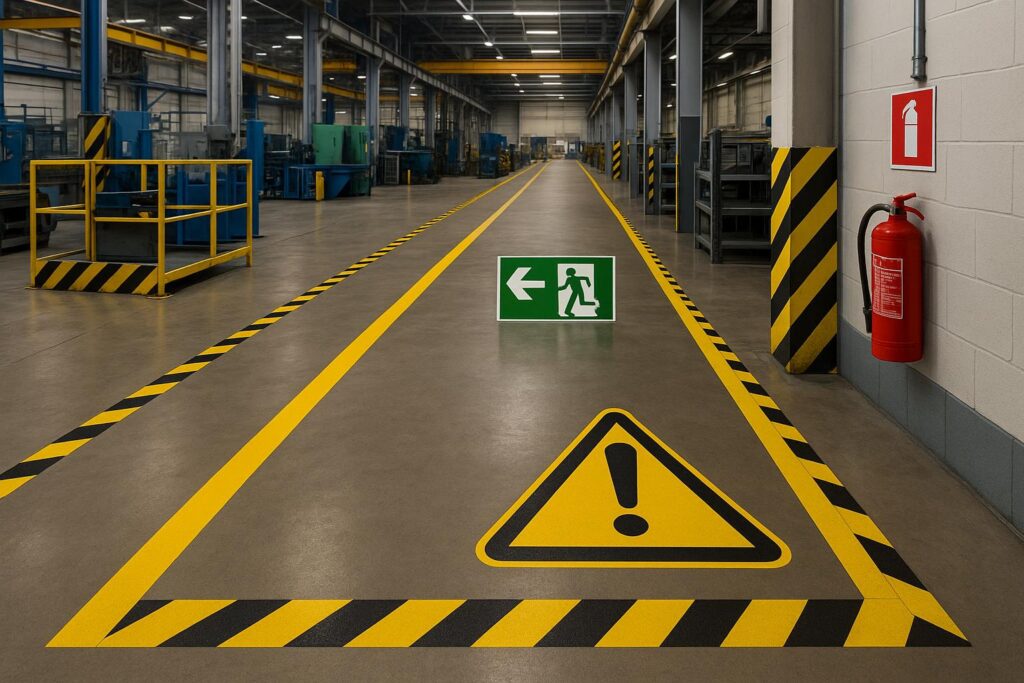
Slips, trips, and falls remain the number one cause of workplace injuries and workers’ compensation claims globally. Uneven concrete, slippery oil stains that have soaked deep into porous floors, and pooling water are massive legal liabilities.
Modern industrial flooring systems fix this directly. They can be fully customized with aggressive anti-slip quartz textures. They feature permanent, embedded hazard-marking lines that never peel up like standard floor tape. They keep you compliant, and they keep your workers safe.
Final Thoughts
Industrial flooring is not an aesthetic expense. You are not buying a floor to make the warehouse look pretty. It is a critical operational investment. The daily, compounding cost of concrete dust, damaged inventory, broken machinery, slowed production, and injury liabilities will always be significantly higher than the cost of a proper flooring system. By upgrading to a seamless, durable Chemcoats resin floor, you stop the financial bleed, protect your heavy assets, and future-proof your facility.